

How Do I Generate Consistent Leads Without Relying on Referrals?
What Does "Consistent Leads" Actually Mean?
Start by Defining the Leads You Want
Consistent Leads Come From a Connected System
Where Is Your Lead System Breaking Down?
What If SEO or Advertising Didn't Work Before?
The Goodbrush Painting Co.: Brand and Lead Generation Working Together
Did the Channel Fail or Did the Marketing Provider?
Questions to Ask Your Current Marketing Provider
How Can You Start Generating Leads More Consistently?
Frequently Asked Questions
Build a Lead System Not Another Isolated Campaign
Find Out Where Your Lead System Is Losing Opportunities
Generate Consistent Leads
How Do I Generate Consistent Leads Without Relying on Referrals?
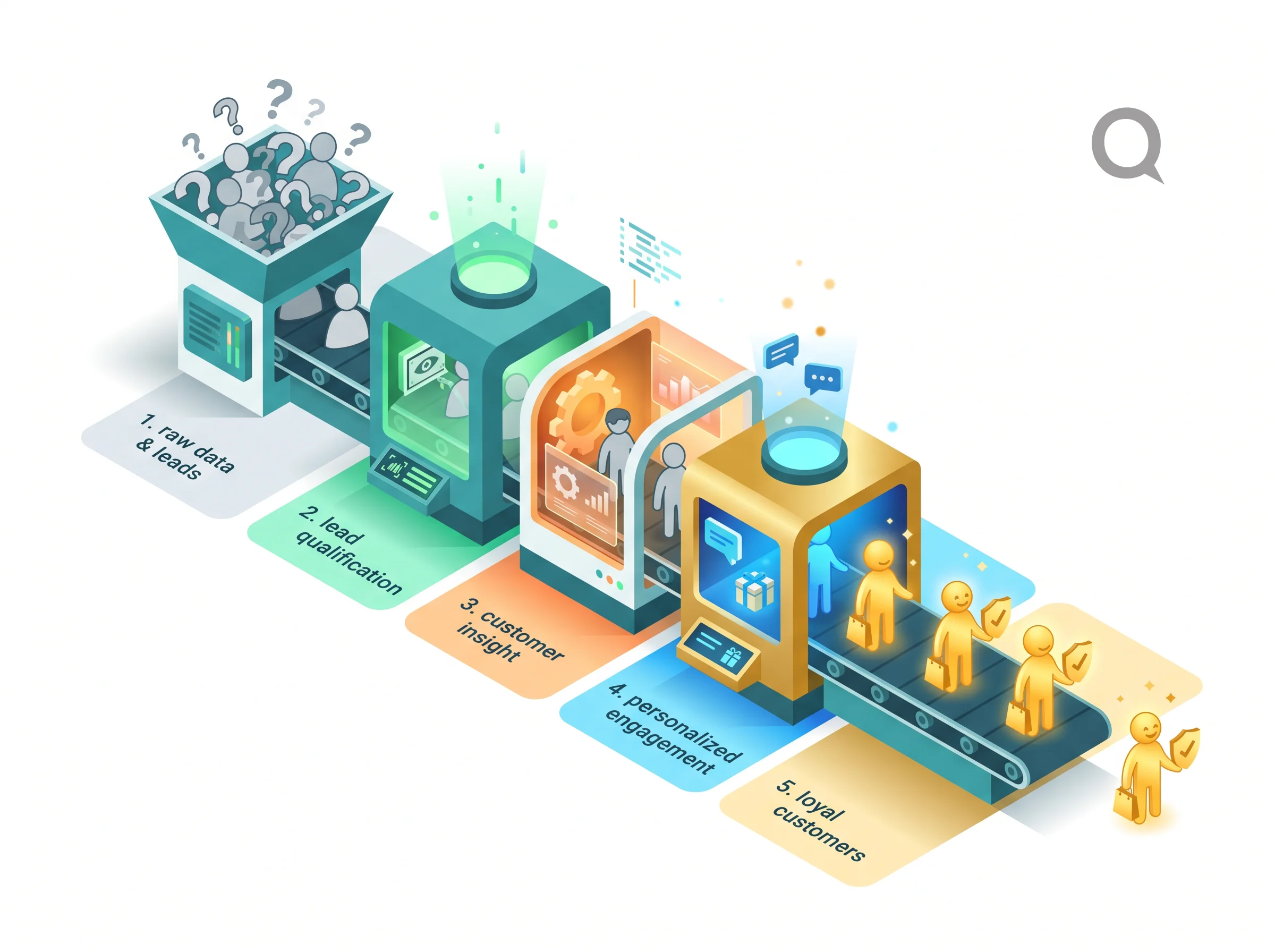
To generate consistent leads, your small business needs a connected system that helps the right people find you, understand your value, trust your business, and take the next step.
Referrals are valuable. They often arrive with trust already attached, which can make them easier to convert.
But referrals are also unpredictable.
You cannot control when someone recommends you, how they describe your business, whether the prospect is a good fit, or whether enough referrals will arrive when you need them. Referrals prove that your business creates value.
They do not automatically create a predictable growth system.
The goal is not to replace referrals. It is to build other reliable ways for potential customers to discover and choose you.
What Does “Consistent Leads” Actually Mean?
Consistent does not mean receiving the same number of inquiries every week. Demand changes with the season, economy, competition, customer buying cycles, market size, and the urgency of your service.
No responsible marketing professional can guarantee an identical lead volume every month. Consistency means having greater visibility and control.
You should know:
- Where opportunities are coming from
- Which sources produce better-fit prospects
- What it costs to generate an opportunity
- How many leads become customers
- Where prospects are being lost
- What should be improved next.
The objective is not perfect predictability. It is building something more dependable than waiting for the phone to ring.
Start by Defining the Leads You Want
Before trying to generate more leads, define what a good lead means.
A qualified opportunity may be someone who:
- Needs a service you want to provide
- Is located in the market you serve
- Has an appropriate budget
- Values your approach
- Has a realistic timeline
- Represents work you want more often.
Without that definition, marketing may produce more calls and forms without creating meaningful growth.
You could end up attracting price shoppers, poor-fit projects, inquiries outside your service area, or requests for work you do not want.
The first question is not: “How do we get more leads?”
It is: “Which opportunities do we want more of?”
Consistent Leads Come From a Connected System
Small businesses often search for one answer:
- SEO
- Google Ads
- Social media
- Email marketing
- A new website
- Marketing automation
- A different agency.
Any of these may help. None can carry the entire responsibility for growth. A reliable lead system connects five stages.
1. Brand clarity
Your marketing needs a clear answer to: “Why should the right customer choose you?”
That begins with understanding who you serve, what problem you solve, what value you provide, and what makes your approach meaningfully different.
If your message sounds like every competitor, potential customers may compare you mainly on price.
SEO can help people find you. Advertising can get their attention. Your brand must give them a reason to care.
2. The right visibility
Choose marketing channels based on how customers make decisions.
SEO and Google Ads are particularly useful when people already know they need a service and are actively searching for it.
Content, email, social media, partnerships, and thought leadership can help when customers need more education or trust before they are ready to act.
You may eventually use several channels, but spreading a limited budget across too many at once can make it difficult to gain traction or understand what is working.
Begin with the channel closest to your customer’s buying behaviour.
3. A convincing destination
Visibility is not a lead.
A ranking is not a lead.
A click is not a lead.
Your website or landing page must help the visitor decide whether contacting you is worthwhile.
It should quickly answer:
- Am I in the right place?
- Does this business understand my problem?
- What makes it different?
- What proof can I see?
- What happens if I reach out?
- What should I do next?
More traffic cannot overcome unclear positioning, weak proof, or a confusing next step. It may only allow more people to experience the problem.
4. Timely follow-up
Lead generation does not end when someone submits a form or leaves a voicemail. That is where conversion begins.
Potential customers may be contacting several companies. If your response is slow, generic, or confusing, the opportunity can disappear.
Your process should confirm the inquiry, explain what happens next, answer likely concerns, and continue the conversation when the prospect is not ready immediately.
Automation can improve consistency, but it should support helpful human communication—not replace it.
5. Meaningful measurement
Clicks, impressions, rankings, and website visits can help explain what is happening. They are not the final result.
Track the path from attention to revenue:
- Where did the lead come from?
- Was it qualified?
- Did it become a conversation, estimate, or appointment?
- Did it become a customer?
- What was the sale worth?
- Why was the opportunity won or lost?
If you only measure traffic, you may invest more in sources that generate activity but few customers.
Where Is Your Lead System Breaking Down?
Different symptoms point to different problems.
| What you are seeing | What may need attention |
| Very little website traffic | Visibility, advertising, awareness or market demand |
| Traffic but few inquiries | Search intent, positioning, messaging, proof or conversion |
| Plenty of inquiries but poor lead quality | Targeting, keywords, offer or qualification |
| Good leads but few sales | Response time, sales process, proposals, trust or follow-up |
| Strong rankings but little revenue | Wrong keywords, weak intent, poor conversion or tracking |
| Expensive advertising leads | Targeting, competition, offer, landing page or customer economics |
| Marketing reports look good but sales do not | Measurement is focused on activity rather than outcomes |
Do not respond to every problem by adding another tactic. First identify which part of the system is restricting the result.
What If SEO or Advertising Didn’t Work Before?
A disappointing SEO or advertising experience does not prove that the channel cannot work. It means the result needs to be diagnosed.
SEO may underperform because the wrong keywords were targeted, the content attracted researchers rather than buyers, local search was neglected, the website did not convert, or progress was measured by rankings instead of qualified leads.
Google Ads may underperform because of weak targeting, poor keyword control, a generic offer, an insufficient budget, an unfocused landing page, incomplete tracking, or slow follow-up.
Sometimes the provider is the problem. Sometimes the strategy is wrong. Sometimes the website, offer, sales process, or market economics make the campaign difficult to sustain. And sometimes the channel genuinely is not the right priority for that business at that time.
Google Ads works.
SEO works.
Email and social media work.
But they do not work automatically, and they are not equally appropriate for every company.
One poor campaign does not prove the channel is broken. It proves something in the system needs to be understood.
The Goodbrush Painting Co.: Brand and Lead Generation Working Together

The Goodbrush Painting Co. demonstrates why consistent lead generation begins before the advertising campaign.
The Toronto painting company originally operated as Empyrean Painting.
The name was difficult for customers to remember, pronounce, and refer. That created friction before the marketing had an opportunity to work.
Mystique helped reposition and rename the business as The Goodbrush Painting Co.
The new name was simpler, more memorable, and better aligned with the qualities customers value in a painting company: reliable work, professional service, and a job done properly.
The transformation included:
- Brand strategy
- Naming
- Messaging
- Logo and visual identity
- Website design
- SEO
- Google Ads
- Content
- Social media support
- Branded applications and signage.
Once the brand and website foundation were established, SEO and paid search had something stronger to promote.
During the measured Google Ads campaign, The Goodbrush generated an 800% return on investment with a conversion cost below $24.
Mystique continues to support The Goodbrush through SEO and PPC, refining how the business appears in search, which services and locations are targeted, how visitors experience the website, and how marketing contributes to new opportunities.
The website does more than state that the company paints homes and businesses. It answers the concerns that can prevent a Toronto homeowner from requesting an estimate:
- Will the painters respect my home?
- Will the work last?
- Will the quote and timeline be clear?
- Will the project create unnecessary stress?
- What proof does the company provide?
The message emphasizes careful preparation, clean and respectful service, clear estimates, premium finishes, and a three-year workmanship warranty.
SEO helps the right people find those answers.
Google Ads creates visibility when potential customers are actively looking.
The website turns that attention into estimate requests.
The brand gives them a reason to trust what they see.
That is not one marketing tactic.
It is a connected lead-generation system.
Did the Channel Fail—or Did the Marketing Provider?
A disappointing agency or consultant can make an owner question the entire idea of marketing.
But the provider and the channel are not the same thing.
A weak engagement may involve:
- Poor strategy
- Unclear positioning
- The wrong channel
- Weak execution
- Unrealistic expectations
- Insufficient budget
- Incomplete tracking
- A website that does not convert
- Leads that are not followed up
- A provider who does not understand the business.
A good professional should not defend a tactic simply because they sell it.
They should help you understand:
- What is happening
- What has been learned
- Which activities are producing qualified opportunities
- Where prospects are being lost
- What should change
- What should stop
- Whether the channel still makes business sense.
Professional marketing is not simply knowing how to operate an advertising or SEO platform.
It is knowing what should be promoted, who should see it, why they should care, where they should be sent, what proof they need, and what should happen after they respond.
Questions to Ask Your Current Marketing Provider
Ask:
- Which activities are producing qualified leads?
- How are those leads being connected to customers and revenue?
- Which services, locations, and customer groups perform best?
- Where are prospects dropping out?
- What have we learned from the work?
- What has changed because of that learning?
- What should we stop doing?
- What needs improvement outside the campaign?
- What should we realistically expect next?
- Do we own and control our accounts, analytics, and data?
Clear questions should receive clear answers.
Marketing can be complex, but complexity should never be used to avoid accountability.
How Can You Start Generating Leads More Consistently?
Begin with one focused path:
- Define a qualified lead.
- Choose one priority service.
- Clarify why the right customer should choose you.
- Select the channel closest to their buying behaviour.
- Improve the page where they will arrive.
- Add relevant proof.
- Create one clear next step.
- Respond quickly.
- Track the lead through to revenue.
- Improve the weakest stage before adding another tactic.
You do not need to be everywhere. You need one connected path that works well enough to measure, learn from, and improve.
Frequently Asked Questions
How can I generate leads without referrals?
Build a clear position, choose channels that match how your customers buy, create a persuasive website or landing page, provide proof, follow up consistently, and track which sources produce customers.
Should I use SEO or Google Ads?
SEO can build visibility over time. Google Ads can create targeted visibility more quickly. The right choice depends on search demand, competition, urgency, budget, customer value, and the strength of your website. Some businesses benefit from using both.
Why do I get website traffic but no leads?
The traffic may lack buying intent, or the website may not communicate your value, build trust, address concerns, or make the next step clear.
How do I know if my marketing professional is doing a good job?
Your provider should be able to connect activity to qualified leads, explain what has been learned, identify where opportunities are being lost, and recommend specific improvements.
Should I replace my SEO or advertising agency?
First review the strategy, execution, tracking, lead quality, website conversion, follow-up, expectations, and channel fit. If the provider cannot clearly explain what is happening and what needs to change, seek an experienced second opinion.
Build a Lead System—Not Another Isolated Campaign
You do not need to abandon referrals. You need a more dependable way to create and convert opportunities when referrals are not enough.
If SEO, advertising, or another marketing effort has disappointed you, do not automatically assume the channel is broken—or that spending more will fix it.
Find the weak point.
The problem may be the strategy, positioning, targeting, offer, website, tracking, follow-up, economics, or the professional managing the work.
Consistent lead generation begins when every part of the system gives the right customer another reason to move forward.
Find Out Where Your Lead System Is Losing Opportunities
Mystique Brand Communications helps Toronto and Canadian small businesses connect brand strategy, websites, SEO, PPC, lead generation, follow-up, and measurement.
We do not begin by assuming you need more marketing.
We begin by identifying what is already working, where opportunities are being lost, and what needs to change first.
Before you spend more on another tactic, let’s determine which part of your lead-generation system needs the greatest lift.
Brand+Aid
Brand+Aid is your go-to guide for building brands that connect and grow — with practical ideas you can use right away to sharpen your message, stand out locally, and turn attention into action.
Want help applying this to your business? Book a quick call and we’ll map out your next best brand move.
Follow us on social media

