
AI Is Answering Your Customer's Question. Is It Mentioning You?
What AEO Actually Is
Why This Hits Small and Medium Businesses Hardest
How Answer Engines Decide Who to Mention
The Uncomfortable Part: You Cannot Rank for AEO
What to Actually Fix
What You Can and Cannot Measure
AEO Does Not Replace SEO. It Sits On Top of It.
AEO FAQs
The Real Question: When AI Describes Your Category, Does It Know You Exist?
Not Sure If AI Is Mentioning Your Business?
AEO for Small Business
AI Is Answering Your Customer's Question. Is It Mentioning You?
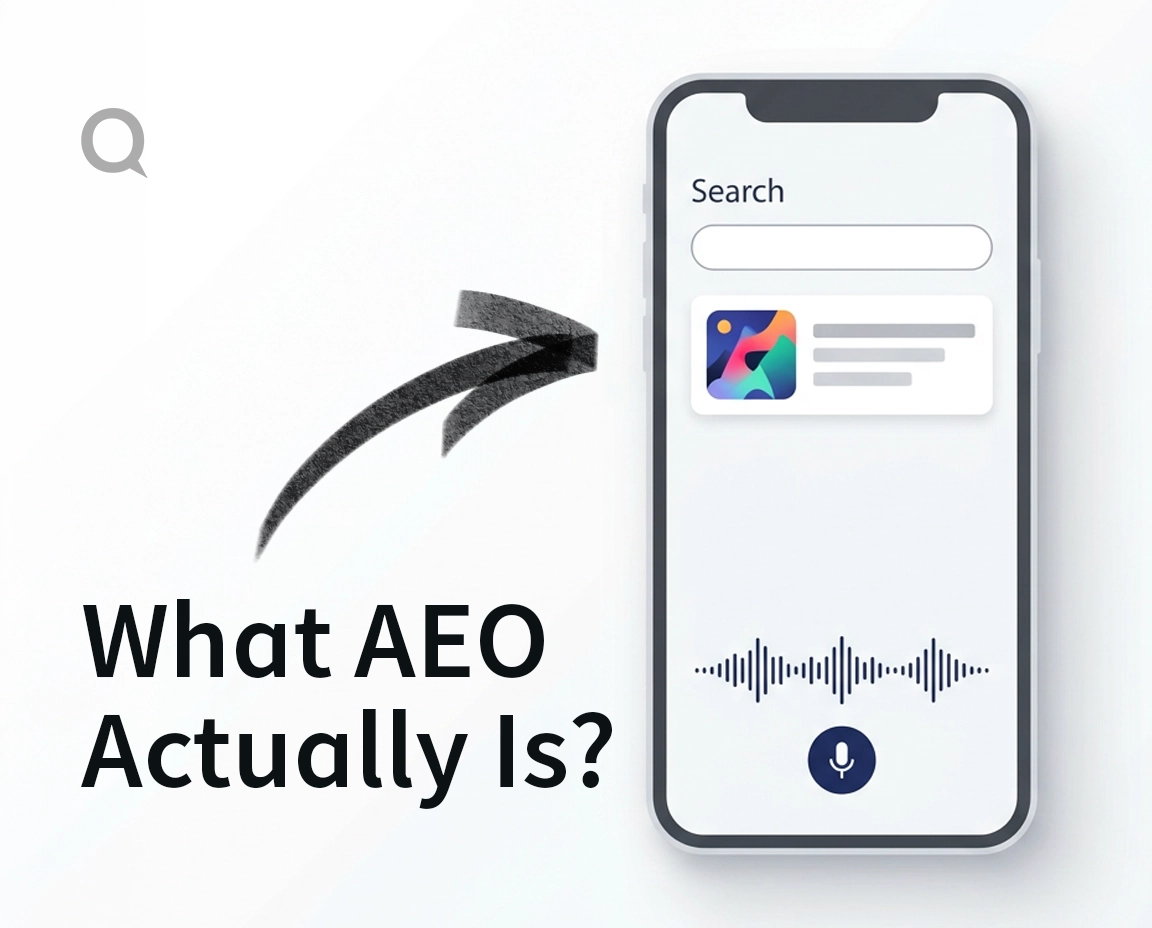
Somewhere this week, someone in your area asked an AI tool a question you should have been the answer to.
Maybe it was "who should I call for a commercial plumbing emergency in the GTA." Maybe it was "how do I find a therapist who works with anxiety near me." Maybe it was "what should I ask before hiring a contractor for a basement renovation."
They got an answer. A short one. Three or four businesses, maybe, or a clear explanation with a couple of names attached.
You may not have been one of them.
Here is the part that should get your attention: you will never see that in your analytics. There was no click to lose. No bounce to measure. No ranking that slipped. The opportunity simply happened somewhere else, without you, and left no trace.
That is the shift AEO is responding to.
What AEO Actually Is
AEO stands for Answer Engine Optimization. It is the work of making your business easy for AI tools to find, understand, trust, and mention when they answer a question.
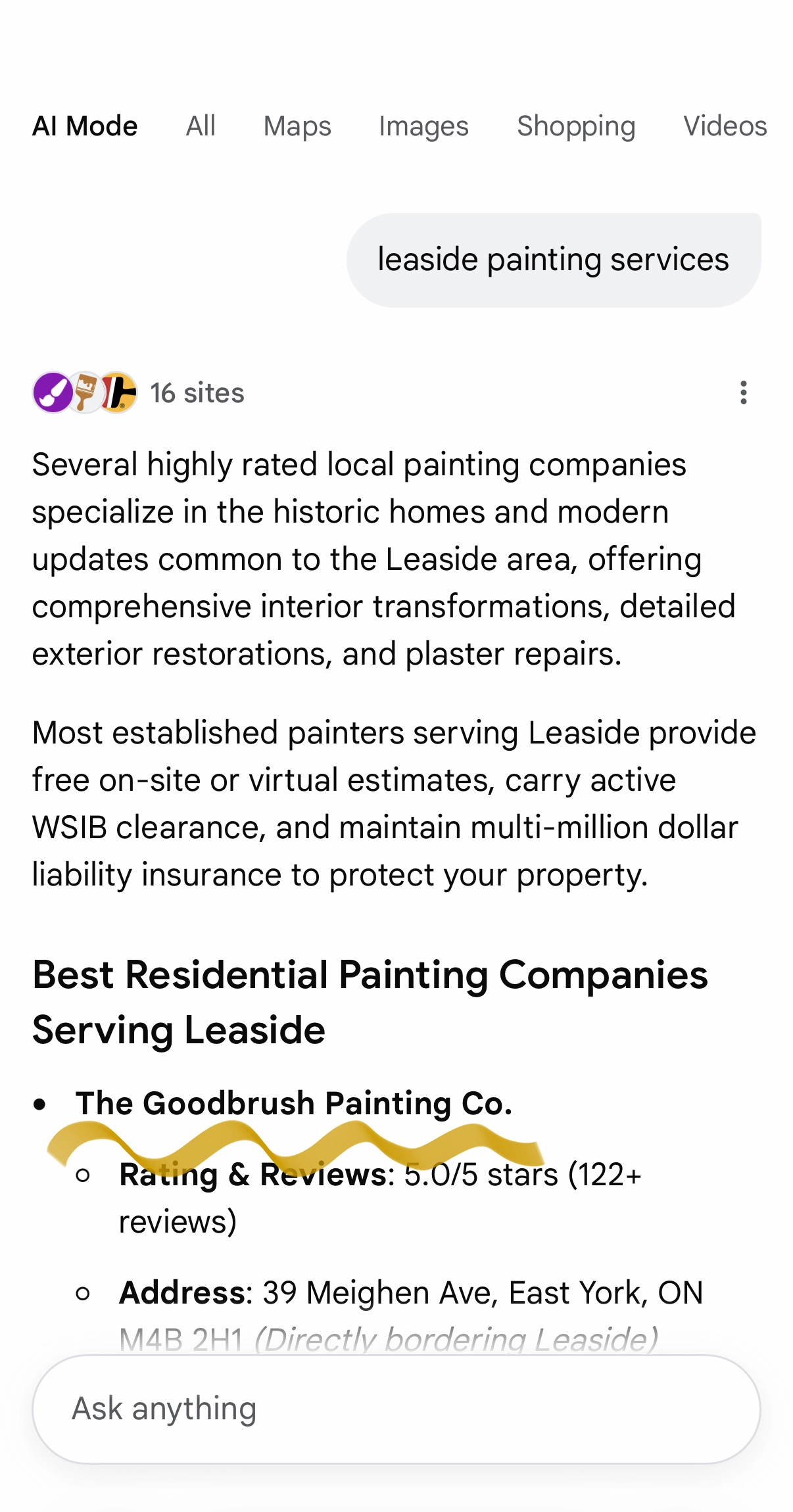
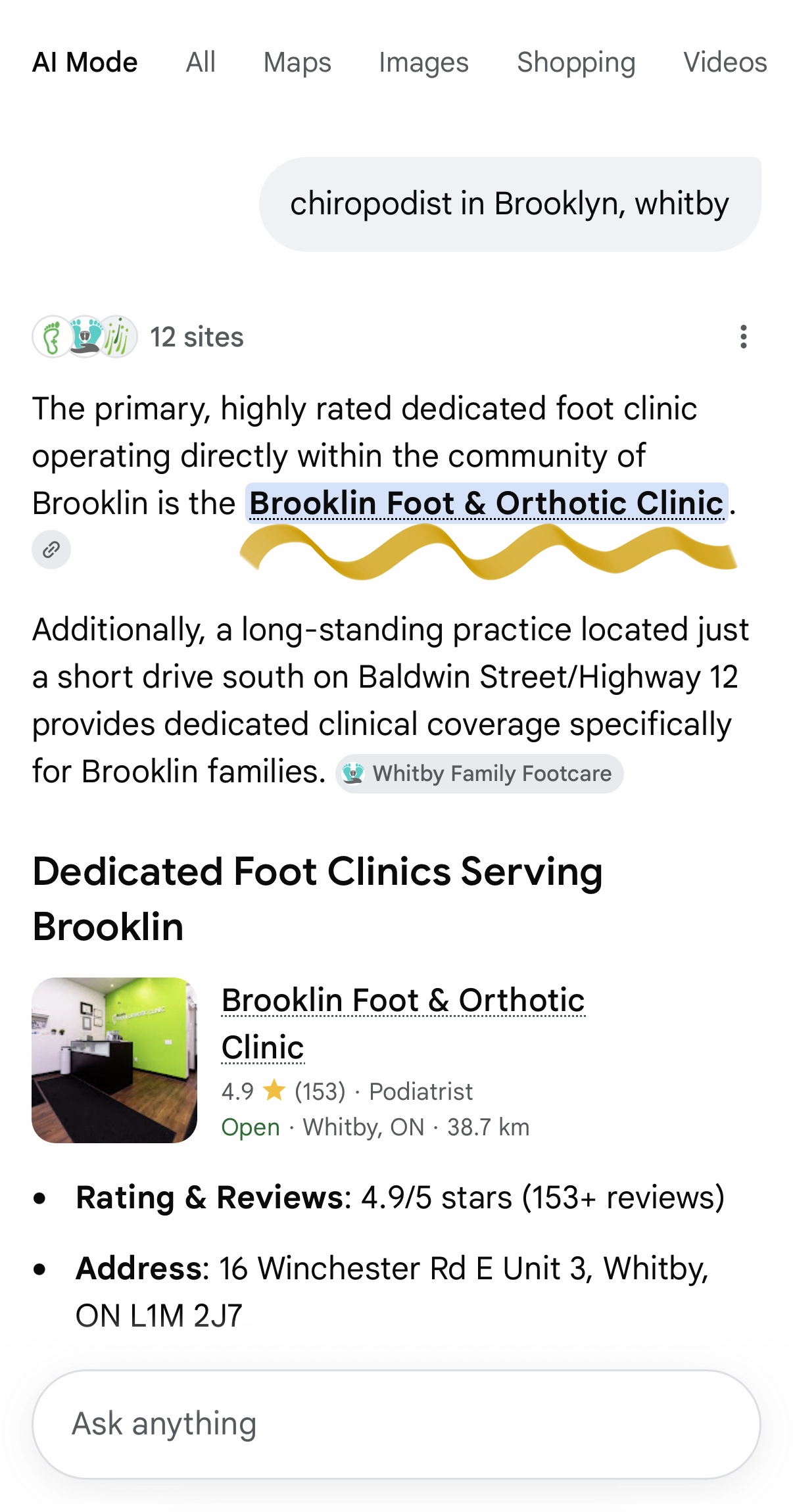
Answer engines are the tools people increasingly use instead of scrolling through search results. Google's AI Overviews. ChatGPT. Perplexity. AI features inside Bing, browsers, and phones. They do not hand you ten links and wish you luck. They read across many sources and give you an answer.
The difference from traditional SEO is worth understanding clearly.
SEO has largely been about earning a position in a list of links, so someone clicks through to your site. AEO is about being included in the answer itself, whether or not anyone clicks.
Those are related, but they are not the same job. You can rank reasonably well and still be absent from the answer. You can also be mentioned in an answer without being the top-ranked link, because the tool found your content clearer, more specific, or more useful for that particular question.
SEO asks: can people find us?
AEO asks: when the machine explains this, does it include us?
Why This Hits Small and Medium Businesses Hardest
There is a version of this shift that is genuinely bad news for SMBs, and a version that is a real opportunity. Both are true at once.
The bad news is the invisible loss. A large brand with a marketing team is watching this closely. You are running a business. If AI stops mentioning you, nothing breaks loudly. The phone just rings a little less, and it is very easy to blame the season, the economy, or the competition.
The opportunity is that answer engines are not simply ranking by size or budget. They are trying to give a useful, specific answer. A small, focused business that clearly explains exactly what it does, who it helps, and where, can be a better answer to a narrow question than a large generalist that says nothing specific about anything.
That is a real opening. It rewards clarity over spend.
But it only works if you are actually clear. Which brings us to the uncomfortable part.
How Answer Engines Decide Who to Mention
Nobody outside these companies knows the exact mechanics, and anyone claiming a formula is guessing. But the direction is not mysterious, because the goal is not mysterious. These tools are trying to give a correct, useful, trustworthy answer.
So they lean toward sources that are:
Clear. Content that plainly states what something is, who it is for, and how it works. Not content that dances around the point.
Specific. Details, numbers, processes, real conditions, actual service areas. Specificity is what makes something quotable.
Consistent. Your business information matching across your site, your Google Business Profile, directories, and third-party mentions. Contradictions create uncertainty, and uncertain sources get left out.
Corroborated. What other sources say about you matters. Reviews, directories, mentions, and citations you do not control carry weight precisely because you do not control them.
Structured. Content organized so a machine can parse it without guessing. Clear headings. Direct answers. Proper markup.
Notice how much of that overlaps with just being genuinely useful to a human. That is not a coincidence. It is the whole point.
The Uncomfortable Part: You Cannot Rank for AEO
There is no position one in an answer. There is no dashboard showing your AEO ranking. There is no lever to pull.
You cannot optimize your way into an answer the way you could once optimize your way up a results page. You can only make your business worth citing.
That is a genuinely different mindset, and it frustrates people who want a technical fix. There is no technical fix. There is only being clearer, more specific, and more credible than the alternatives the machine is reading.
Which means the businesses that struggle most with AEO are the ones whose content could have been written for anybody. If every plumber's website says quality service and years of experience, an answer engine has nothing to work with. It cannot mention you specifically because you have not said anything specific.
Generic content is not just weak marketing now. It is invisible to the machine, because there is nothing in it to quote.
What to Actually Fix
Here is the practical list. Most of it is not exotic.
Answer real questions in plain language. Not the questions you wish people asked. The ones they actually ask, in the words they actually use. What does it cost. How long does it take. Do you serve my area. What happens after I call. What should I ask before hiring someone. If your site answers those directly, you become quotable. If it does not, you are asking the machine to infer, and it usually will not bother.
Answer the question first, then explain. Put the direct answer in the first sentence or two under the heading, then add context. Content that buries the answer three paragraphs into a story is hard to extract. Content that leads with the answer is easy.
Structure it so a machine can parse it. Descriptive headings that match real questions. Short paragraphs. Lists where lists make sense. A logical page structure. This is not about tricking anything. It is about not making the reader, human or otherwise, work to find the point.
Use schema markup properly. Schema is structured data in your site's code that explicitly tells search and AI tools what your content is: your business, your location, your services, your FAQs, your articles, your reviews. It removes guesswork. Most small business sites either skip it entirely or have it half-implemented by a plugin nobody configured. Doing it properly is one of the few genuinely technical parts of AEO, and it is worth doing right.
Treat your Google Business Profile as a data source, not a listing. It is now one of the most authoritative sources of truth about your business for both search and AI. Complete, accurate, current, with real services listed, real hours, real photos, and a description that says something specific. An abandoned profile is not neutral. It is a signal.
Take reviews seriously, including what they say. Specific reviews that mention the actual service, the neighbourhood, and the outcome do more than star ratings. They are third-party corroboration of what you claim about yourself, in language a machine can read.
Be specific enough to be the obvious answer to a narrow question. You will rarely win "best contractor in Ontario." You can absolutely be the clear answer to "who does backflow testing for multi-unit residential buildings in the east end." Narrow is not a limitation. Narrow is how small businesses get mentioned.
Make sure your information is consistent everywhere. Same name, same number, same address, same service area, across your site, your profile, and every directory you appear in. Contradiction creates doubt, and doubt gets you excluded.
What You Can and Cannot Measure
It helps to set expectations here, because measuring AEO is not like measuring traditional SEO.
Google Analytics has added an AI Assistant channel, and you should be watching it. It counts the people who read an AI answer and then clicked through to your site. For most small businesses that number is currently small but growing, and the trend line month over month is more useful than the figure itself.
What it cannot show you is the answer where you were never mentioned. If the tool named three competitors and not you, there was no click to lose, no bounce to measure, no ranking that slipped. Nothing happened that your analytics could record.
Which is why a low AI Assistant number is ambiguous on its own. It might mean few people are asking about your category. It might mean plenty are asking and you are simply not in the answer. Those are very different problems with very different fixes, and the channel report cannot tell you which one you have.
The third-party tools attempting to measure mention rates directly are early and inconsistent. Anyone selling you a precise AEO score is selling you confidence, not data.
So treat the AI Assistant channel as a floor, not a verdict, and watch the signals around it. Are branded searches holding up or growing, meaning people are hearing about you somewhere and then looking you up? Is your lead quality changing, with people arriving already informed and further along in their decision? Are inquiries mentioning things you never told them directly? Is traffic down while leads hold steady, which often means fewer casual visitors and more serious ones?
And the simplest check of all: ask the tools yourself. Ask ChatGPT, Perplexity, and Google what they say about your category, your service, and your area. See who gets named. See what gets said about you if anything. It is not a metric, but it is information, and it is free.
AEO Does Not Replace SEO. It Sits On Top of It.
This is where a lot of the conversation goes wrong.
AEO is not a replacement discipline that makes SEO obsolete. Answer engines are largely reading the same web, drawing on the same signals of relevance, authority, and usefulness. A site with broken structure, thin content, no schema, poor performance, and no local signals is not going to be rescued by an AEO strategy.
The foundations still matter. What changes is the standard.
Vague used to be survivable. You could rank on keywords and volume while saying nothing distinctive, and enough people would click through to make it work. That margin is closing. When the machine is summarizing your category, it needs something specific to say about you, or it will say something specific about someone else.
Which means AEO is not really a new technical discipline. It is an old business question with new urgency: is it clear who you are, who you help, and why you are the right choice?
That was always a brand question. Now it is a visibility question too.
AEO FAQs
What is AEO?
AEO stands for Answer Engine Optimization. It is the practice of making your business easy for AI tools and answer engines to find, understand, trust, and mention when they respond to a user's question, whether or not the user clicks through to your website.
What is the difference between SEO and AEO?
SEO focuses on earning a position in search results so people click through to your site. AEO focuses on being included in the answer itself. They overlap heavily, but AEO places more emphasis on clarity, specificity, structure, and third-party corroboration rather than rankings and clicks.
Is AEO replacing SEO?
No. AEO builds on SEO rather than replacing it. Answer engines still rely on the web, so technical health, useful content, and local signals still matter. What changes is that generic content has less room to hide.
Why does AEO matter for a small business?
Because customers are increasingly getting answers before they click. If AI tools do not mention your business when someone asks about your category, you are absent from the consideration set, and you will not see it happen in your analytics.
How do AI tools decide which businesses to mention?
The exact mechanics are not public, but answer engines favour sources that are clear, specific, consistent across the web, corroborated by third parties like reviews and directories, and structured so the content is easy to parse.
Can I rank number one in AEO?
No. There is no ranking position in an answer. You cannot optimize your way to the top of something that has no list. You can only make your business clear and credible enough to be worth citing.
Does schema markup help with AEO?
Yes. Schema markup explicitly tells search and AI tools what your content is: your business, location, services, articles, FAQs, and reviews. It removes guesswork and is one of the more concrete technical steps you can take.
How do I measure AEO results?
You cannot measure it precisely today. Watch related signals instead: branded search volume, lead quality, whether inquiries arrive better informed, and whether leads hold steady even as raw traffic changes. You can also ask AI tools directly what they say about your category and see who gets named.
Does my Google Business Profile affect AEO?
Yes. Your Google Business Profile is one of the most authoritative sources of information about your business for both search and AI tools. An incomplete or outdated profile weakens your visibility across both.
Do reviews matter for AEO?
Yes. Reviews are third-party corroboration of what you claim about yourself. Specific reviews that mention the actual service, location, and outcome carry more weight than generic praise, because they contain information a machine can actually use.
What kind of content works best for AEO?
Content that answers real customer questions directly and specifically, in plain language, with the answer near the top and clear structure around it. Service pages that explain the actual problem, FAQ content based on real questions, and local pages with genuine detail all perform better than generic marketing copy.
Do I need to publish more content for AEO?
Not necessarily. More content is not the same as better content. A smaller number of clear, specific, genuinely useful pages usually outperforms a large volume of interchangeable posts, because there is something in them worth quoting.
Is AEO worth investing in now, or should I wait?
Most of what helps with AEO also helps with SEO, conversion, and sales conversations right now. Clearer messaging, better service pages, proper schema, and stronger reviews pay off regardless of how the AI landscape develops. Very little of it is a bet.
Can I do AEO myself?
You can start. Improving your Google Business Profile, asking for specific reviews, and answering real customer questions clearly are all within reach. Schema implementation, content structure, and positioning are where most businesses benefit from help.
The Real Question: When AI Describes Your Category, Does It Know You Exist?
Here is the test that cuts through all of it.
Open an AI tool right now. Ask it the question your best customer would ask before hiring someone like you. Read the answer.
If your business is not in it, that is not a technical failure. It is usually a clarity failure. The machine could not find anything specific enough about you to say.
That is fixable, but not with tricks. It is fixed the same way you would fix it with a human customer: by being specific about who you help, what you solve, where you work, and why you are the right choice, and by making that easy to find and easy to verify.
Search is getting better at understanding intent. It still needs something meaningful to understand.
So the better question is not whether you are optimized for AI. It is whether your business is clear enough to be worth mentioning.
Not Sure If AI Is Mentioning Your Business?
You do not have to guess. Ahrefs offers a free AI Visibility Checker that shows how often ChatGPT, Gemini, Perplexity, Copilot, and Google AI Overviews mention your brand when they answer questions in your category. No signup, results in seconds.
Check your business here: Free AI Visibility Checker
Enter your business name the way a customer would say it, and see what comes back. If your business shows up across the platforms, good, you already have a foundation to build on. If it barely appears, or your competitors are getting named instead, that is not a search problem. It is usually a clarity problem, and that is fixable.
If your traffic is shifting, your leads are changing, or the checker shows you are missing from the answers, the next step is figuring out why. Mystique helps small and medium businesses sharpen their positioning, strengthen their message, structure their content properly, and build websites that are easy for both people and answer engines to find, understand, trust, and choose.
Run the check first. If you do not like what you see, let's talk about fixing it.
Brand+Aid
Brand+Aid is your go-to guide for building brands that connect and grow — with practical ideas you can use right away to sharpen your message, stand out locally, and turn attention into action.
Want help applying this to your business? Book a quick call and we’ll map out your next best brand move.
Follow us on social media
Land in the Inbox, Stay Top of Mind
Campaigns Engineered to Open, Click, and Convert.