

How Much Should a Small Business Spend on Branding?
Small business branding costs in Canada
Why is there such a wide range?
Start with what is costing you business
What does each branding investment level usually buy?
Should my branding budget be based on revenue?
Remember to budget for implementation
Is low-cost branding a bad investment?
Is more expensive branding always better?
What should a branding proposal include?
Five questions to ask before setting your budget
How much should you spend on branding?
Frequently asked questions about small business branding costs
Before you spend more, make sure you are fixing the right problem
How Much Should a Small Business Spend on Branding?
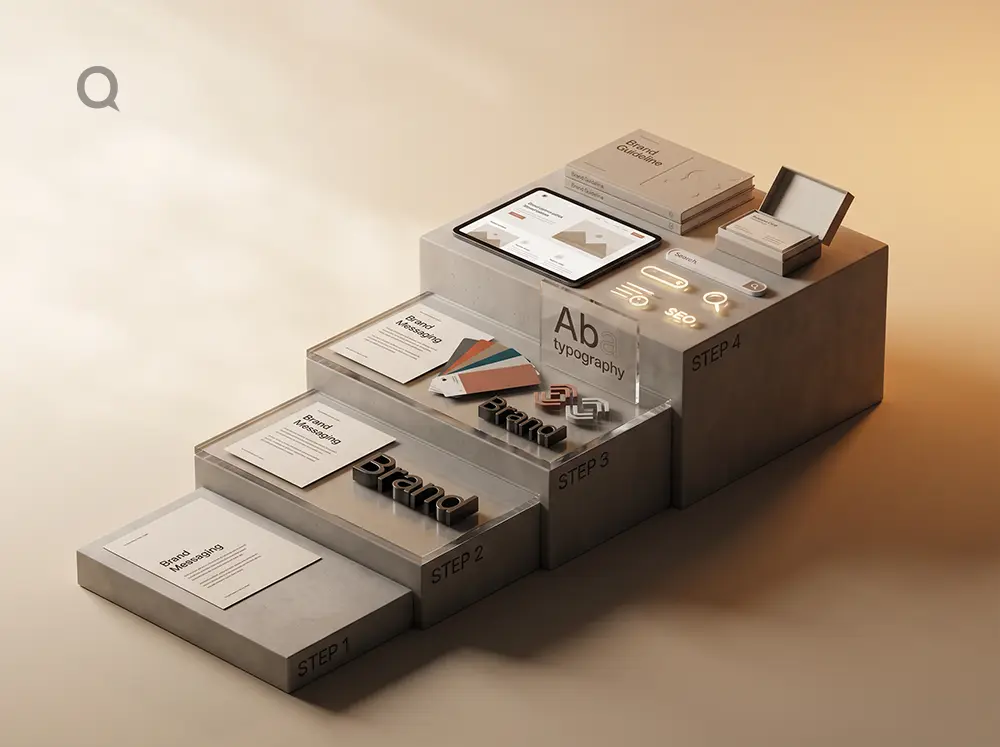
Most Canadian small businesses should expect to invest between $2,500 and $15,000 in focused branding work. A complete rebrand may range from $15,000 to $40,000 or more.
That does not mean every small business should spend that much.
If your business already has a credible identity but struggles to explain its value, a focused messaging project may be enough.
If your name, positioning, identity, website, and marketing no longer reflect the business, you may need a more substantial investment.
The right question is not:
“How much does branding cost?”
It is:
“What needs to change so more of the right customers understand, trust, and choose my business?”
The answer determines the scope. The scope determines the budget.
Small Business Branding Costs in Canada
The following Canadian branding costs provide a realistic starting point for budget planning:
| Branding Service | Typical Canadian Investment |
|---|---|
| Brand messaging refresh | $2,500–$6,500 |
| Brand strategy and messaging | $6,500–$15,000 |
| Customer or market research | $3,500–$15,000+ |
| Business naming and brand foundation | $7,500–$18,000 |
| Visual identity refresh | $5,000–$18,000 |
| Complete small business rebrand | $15,000–$40,000+ |
| Website messaging and structure | $2,500–$6,500 |
| Focused five-page website refresh | $5,000–$9,500 |
| Eight-to-ten-page business website | $8,500–$15,000 |
| Brand, website, content, SEO and conversion foundation | $25,000–$50,000+ |
All figures are in Canadian dollars and exclude applicable taxes. These are planning ranges, not fixed packages.
Your actual investment will depend on what must be researched, clarified, created, and implemented.
Why Is There Such a Wide Range?
Branding is not one product.
One provider may define branding as designing a logo. Another may include customer research, positioning, messaging, visual identity, website strategy, brand guidelines, and launch support.
Both may call the service “branding,” but they are solving very different problems.
Branding costs are influenced by:
- The size and complexity of the business
- The number of audiences, services, or locations
- The amount of customer and competitor research required
- Whether your positioning is already clear
- Whether you need a new name
- The depth of messaging required
- The number of decision-makers involved
- The number of brand applications needed
- Whether your website is included
- How much launch and implementation support you need
This is why comparing branding proposals only by price can be misleading.
A $3,000 proposal and a $15,000 proposal may both mention strategy, messaging, and identity. The depth of thinking, research, experience, and implementation may be completely different.
Before comparing the prices, make sure you are comparing the same work.
Start With What Is Costing You Business
A branding budget should begin with the problem—not the package.
Ask what is currently getting in the way of growth:
- Do people struggle to understand what you do?
- Does your business sound like every competitor?
- Are you attracting too many price-focused inquiries?
- Has your business outgrown its original identity?
- Does your website undersell the quality of your work?
- Are your sales and marketing messages inconsistent?
- Are you entering a new market?
- Are you preparing to invest more in lead generation?
- Have your services or ideal customers changed?
- Are competitors appearing stronger than they really are?
These problems do not all require a complete rebrand.
If the identity is still credible but the message is unclear, you may only need positioning and messaging.
If the business has changed substantially and the name, identity, message, and website are all working against you, making a small cosmetic adjustment may only delay the larger investment.
There is no benefit in spending $40,000 when clearer messaging would solve the problem.
There is also little value in spending $2,500 on surface-level changes when the foundation needs to be rebuilt.
What Does Each Branding Investment Level Usually Buy?
Under $2,500: DIY or limited creative work
At this level, you may be using online tools, purchasing a template, or hiring a freelancer for a specific deliverable.
You might receive:
- A basic logo
- A colour palette
- Font recommendations
- A website template
- A small set of graphic elements
This may be entirely appropriate when you are testing a new idea, launching a side business, or working with a very limited startup budget.
The trade-off is that there may be little room for research, positioning, messaging, strategic exploration, or a flexible identity system.
You may receive something that looks finished without clarifying why customers should choose the business.
$2,500–$6,500: messaging and brand clarification
This can be a strong starting point when your business is established but its value is not being communicated clearly enough.
The work may include:
- Positioning refinement
- A stronger value proposition
- Homepage messaging
- Service-page direction
- Brand language
- Calls to action
- Sales-message alignment
For many small businesses, clearer messaging will create more immediate value than a new logo.
If customers do not understand your value, changing your colours will not solve the problem.
$5,000–$18,000: visual identity refresh
A visual refresh may be appropriate when your business strategy is sound but the brand looks dated, inconsistent, or less professional than the company it represents.
The project may include:
- Logo refinement or redesign
- Colour system
- Typography
- Supporting graphics
- Photography direction
- Brand guidelines
- Selected business applications
Confirm how much strategy is included. Some identity projects focus primarily on visual design. Others begin by examining the audience, competition, positioning, and message.
A new identity is most effective when it expresses a clear strategy.
$6,500–$15,000: brand strategy and messaging
This level addresses how the business should be understood—not simply how it should look.
It may include:
- Discovery workshops
- Customer and competitor review
- Audience definition
- Brand positioning
- Value proposition
- Message hierarchy
- Brand personality
- Tone of voice
- Website messaging direction
The result should give your website, marketing, and sales communication a shared foundation.
This is often the right level for an established business that delivers genuine value but has difficulty explaining what makes it worth choosing.
$15,000–$40,000+: complete small business rebrand
A complete rebrand may be appropriate when the business has changed significantly or needs to compete at a different level.
The project may include:
- Customer and stakeholder research
- Competitive analysis
- Brand strategy
- Positioning and messaging
- Naming or name evaluation
- Visual identity
- Brand guidelines
- Website direction
- Sales and marketing applications
- Launch planning
The higher investment reflects the importance and number of decisions being made.
A full rebrand can affect how customers, employees, recruits, partners, and potential buyers understand the business for years. The cost of making the wrong decision can be much greater than the cost of doing the work properly.
Should My Branding Budget Be Based on Revenue?
Revenue matters because it affects what your business can comfortably invest. But a fixed percentage of revenue is rarely the best way to determine a branding budget.
Two businesses with the same revenue may face very different situations.
One may rely on a small number of established relationships and need only a messaging update. Another may be launching multiple locations, entering a competitive market, or preparing to invest heavily in marketing.
A better budget considers four factors.
1. The problem
What is unclear, outdated, inconsistent, or limiting growth?
2. The opportunity
What could a stronger brand help you achieve?
This might include attracting better clients, supporting higher-value services, entering a new market, improving website conversion, or preparing the business for sale.
3. The risk
What could happen if you make the wrong decision—or continue with the current brand?
Consider lost opportunities, price pressure, weak conversion, confusing sales messages, and marketing that fails to gain traction.
4. The useful life
A marketing campaign may run for several weeks. A strong name, position, message, or identity may support the business for many years.
The longer the work will influence customer decisions, the more important it becomes to get the foundation right.
Remember to Budget for Implementation
Creating the brand is only part of the investment.
You may also need to update:
- Your website
- Signage
- Vehicle graphics
- Packaging
- Proposals and presentations
- Sales materials
- Social media profiles
- Email templates
- Staff uniforms
- Photography and video
- Google Business Profile
- Online directories
- Printed materials
Naming projects may also require domain purchases and professional trademark advice. Legal searches and trademark registration should be handled by a qualified trademark professional and may not be included in the branding proposal.
Ask what is included, what is excluded, and what it will cost to apply the new brand consistently.
A strong strategy and identity have limited value if there is no budget left to bring them to market.
Is Low-Cost Branding a Bad Investment?
Not automatically.
Lower-cost branding may be appropriate when:
- You are testing a business concept
- Your offer is still changing
- You need one clearly defined deliverable
- The business has little existing brand equity
- You understand the limitations of the engagement
The problem is expecting a tactical project to solve a strategic issue.
A low-cost logo will not define your positioning, clarify an unfocused offer, or give customers a meaningful reason to choose you.
If those are the real challenges, an inexpensive solution may eventually cost more because the work will need to be repeated.
Is More Expensive Branding Always Better?
No.
A higher fee may reflect deeper research, more experienced strategists, more complex creative development, or a larger team. It may also include a level of process your small business does not need.
Do not pay for complexity that does not create value.
The right investment should reflect:
- The importance of the decision
- The complexity of the problem
- The number of people and touchpoints affected
- The value of the opportunity
- The risk of getting it wrong
Good branding is not measured by the size of the presentation or the number of concepts produced.
It is measured by whether the result makes your business easier to understand, trust, and choose.
What Should a Branding Proposal Include?
A useful proposal should make it clear what you are buying and why it matters.
Look for:
- The business problem being addressed
- The strategic questions being answered
- The research and discovery process
- The specific deliverables
- The people responsible for the work
- The number and type of revisions
- The project schedule
- Your responsibilities
- What is not included
- Ownership and usage rights
- Implementation requirements
- How success will be evaluated
Be cautious when a proposal jumps directly into logos, colours, or website layouts without first addressing your audience, positioning, message, competition, and business goals.
Design should express the strategy—not take its place.
Five Questions to Ask Before Setting Your Budget
- What business problem are we trying to solve?
- What must customers understand that they do not understand now?
- Which parts of our existing brand are still working?
- What will it cost to implement the work after it is created?
- What is likely to happen if we postpone the decision for another year?
These answers will help you determine whether you need a focused correction, a strategic foundation, or a complete rebrand.
How Much Should You Spend on Branding?
Spend enough to solve the right problem properly—without buying more process than your business needs.
That may mean:
- $2,500–$6,500 to clarify your positioning and message
- $5,000–$18,000 to strengthen your visual identity
- $6,500–$15,000 to build a more complete brand strategy
- $15,000–$40,000+ to reposition and rebrand the business
- $25,000–$50,000+ to connect the brand to a larger website, content, SEO, and conversion system
The number should follow the diagnosis.
First determine what is preventing customers from understanding, trusting, or choosing your business. Then build the scope and budget around changing it.
Frequently Asked Questions About Small Business Branding Costs
How much does branding cost for a small business in Canada?
Focused branding work may range from $2,500 to $15,000. A complete small business rebrand may range from $15,000 to $40,000 or more, depending on the strategy, research, identity, messaging, website requirements, and implementation involved.
How much does branding cost in Toronto?
Toronto small business branding costs vary by scope. A focused messaging project may cost $2,500–$6,500, brand strategy may cost $6,500–$15,000, and a complete rebrand may cost $15,000–$40,000 or more.
Is a logo included in branding?
A logo may be included when visual identity is part of the scope. Branding is broader than a logo and may also include positioning, messaging, audience definition, differentiation, tone of voice, and brand guidelines.
Should I invest in branding or marketing first?
If your positioning, message, or website is unclear, strengthen the brand before increasing your marketing investment. Marketing performs better when customers quickly understand why they should choose you.
Can I brand my business myself?
Yes. DIY branding can be appropriate when testing a new idea or working with a limited startup budget. Professional help becomes more valuable as the business, market, audience, and consequences of the decisions become more complex.
When is a complete rebrand worth the cost?
A complete rebrand may be worthwhile when the business has changed substantially, the current identity appears dated, you are attracting the wrong customers, your positioning is unclear, or the brand no longer supports your future direction.
Before You Spend More, Make Sure You Are Fixing the Right Problem
Mystique Brand Communications has helped small and mid-sized businesses clarify, communicate, and grow their brands since 1986.
We do not begin by assuming you need a complete rebrand.
We begin by identifying what is preventing customers from understanding, trusting, or choosing your business. From there, we determine whether you need clearer messaging, stronger positioning, a visual refresh, a better website, or a more complete brand transformation.
Let’s determine what your brand needs—and what it doesn’t—before you spend money in the wrong place.
Brand+Aid
Brand+Aid is your go-to guide for building brands that connect and grow — with practical ideas you can use right away to sharpen your message, stand out locally, and turn attention into action.
Want help applying this to your business? Book a quick call and we’ll map out your next best brand move.
Follow us on social media