

Don’t Confuse a Good-Looking Website with an Effective Website
A Website Should Do More Than Look Nice
Start with the Purpose of the Website
Speak to the Person Visiting the Site
Clear Messaging Beats Clever Messaging
Good Design Should Support the Message
Your Website Needs to Work on Mobile
Speed Can Affect Trust and Conversion
Make the Next Step Obvious
Build Trust Before You Ask for Action
Local Relevance Can Make Your Website Stronger
Your Website Should Answer Real Questions
Before You Redesign, Ask Better Questions
Effective Website FAQs
Testing and Refining Makes the Website Better
The Real Question: Is Your Website Helping People Choose You?
Ready to Take a Closer Look?
Don’t Confuse a Good-Looking Website with an Effective Website
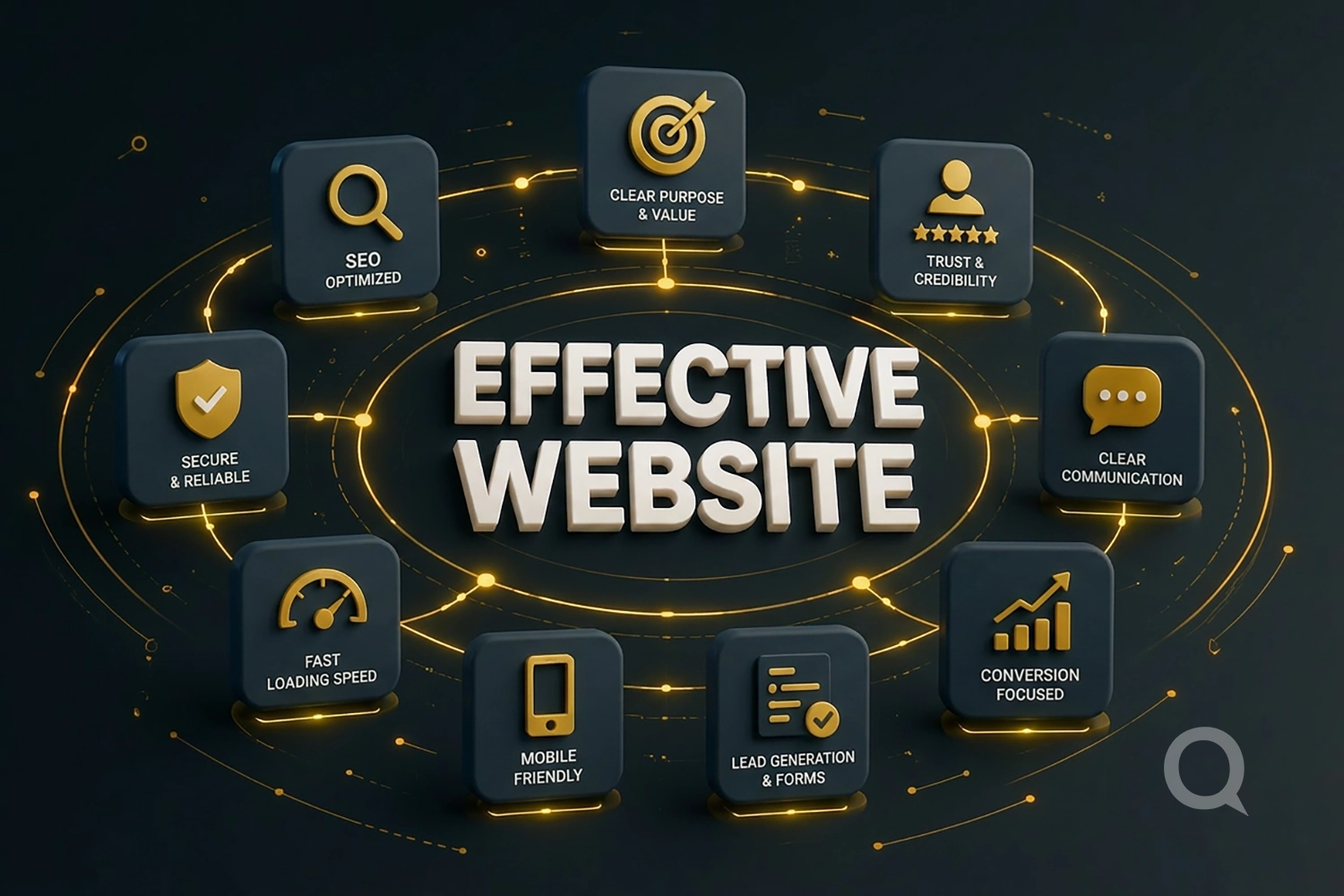
A good-looking website can help you make a strong first impression.
But looking good is not the same as working well.
Your website may be modern, polished, and professionally designed. It may have great images, clean colours, and a layout that feels current. But if it does not help the right people understand what you offer, trust your business, and take the next step, it is not doing enough.
That applies no matter what industry you are in.
Whether you run a professional service firm, healthcare practice, trade business, retail brand, manufacturer, consulting company, restaurant, nonprofit, or local service business, your website has a job to do.
It should help people choose you.
That matters because your website is rarely working alone. It may be supporting your referrals, sales conversations, search visibility, social activity, ads, networking, or reputation. If people are finding you but not taking the next step, your website may be quietly reducing the return on everything else you are doing to grow.
A Website Should Do More Than Look Nice
Too many websites act like digital brochures.
They explain who the company is, list a few services, add some photos, and hope the visitor figures out what to do next.
But your potential customer, client, patient, buyer, donor, or partner is usually not browsing your website for fun.
They are trying to solve a problem.
They want to know:
Can you help me?
Do you understand what I need?
Are you credible?
Are you the right fit?
What makes you different?
What should I do next?
An effective website answers those questions clearly.
It does not make people work too hard. It does not bury the important information. It does not assume visitors already understand your value.
It guides them.

Start with the Purpose of the Website
Before you worry about colours, images, page layouts, or features, get clear on what you need your website to accomplish.
Do you want people to call, book, request a quote, buy, schedule, visit, download, apply, donate, subscribe, or inquire?
Your goal matters because it should shape the entire website.
A website built to generate leads should not be structured the same way as a website built for online sales. A website for a healthcare clinic should not communicate the same way as a website for a construction company. A website for a professional firm should not guide visitors the same way as a website for a restaurant or retail business.
The goal gives the website direction.
Without that direction, the site may look fine but feel unfocused. Visitors may browse, but they may not act.
Speak to the Person Visiting the Site
Your website is not really about you.
It is about the person deciding whether you are the right choice.
That does not mean your story, experience, team, process, or credentials are unimportant. They are often very important. But they need to be framed around what matters to the visitor.
Instead of only saying what you do, show why it matters.
Instead of only listing services, explain what problems you solve.
Instead of only talking about your experience, connect that experience to the confidence, clarity, relief, results, or support your audience is looking for.
A strong website makes the visitor feel understood.
That is where trust begins.
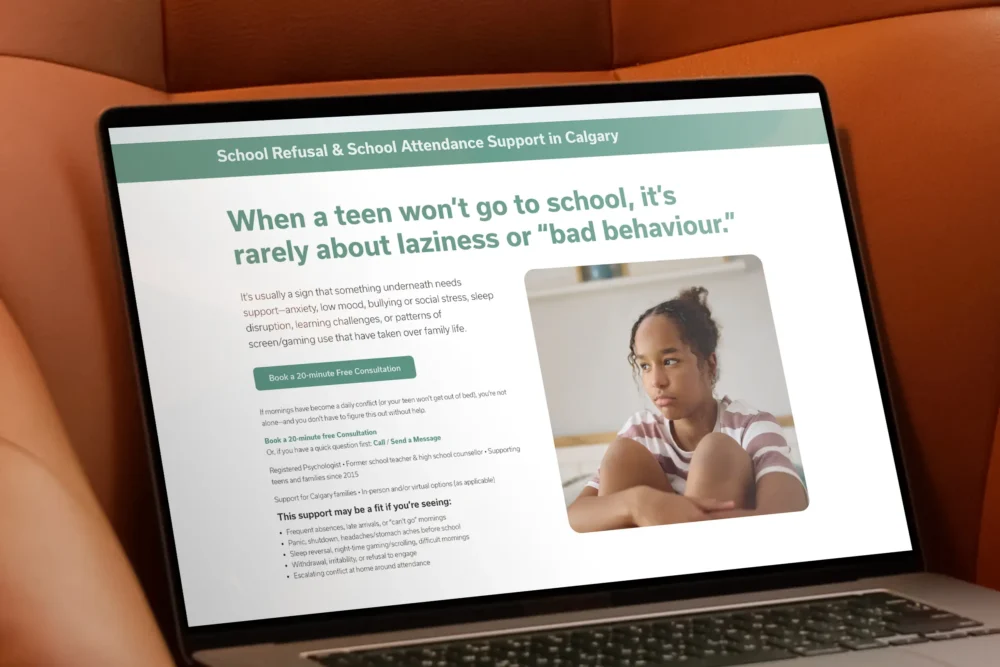
Clear Messaging Beats Clever Messaging
Clever writing can be memorable, but clarity converts.
When someone lands on your website, they should quickly understand:
- What you do
- Who you help
- Where you help them, when location matters
- What problem you solve
- Why they should trust you
- What makes you different
- What they should do next.
If your website looks impressive but leaves people confused, they may leave.
Confusion creates hesitation. Hesitation costs opportunities.
Your headlines, page titles, service descriptions, and calls to action should make your business's value easier to understand. Good messaging removes friction. It gives people confidence that they are in the right place.
Good Design Should Support the Message
Design matters.
But effective design website is not just about making a website attractive. It is about making the website easier to use, easier to understand, and easier to act on.
Strong website design helps people move through the page naturally. It gives the most important information proper emphasis. It makes the content easy to scan. It helps visitors find what they need without frustration.
That includes clear navigation, strong headlines, readable text, professional imagery, mobile-friendly layouts, logical page structure, visible contact options, and calls to action in the right places.
A beautiful website can still fail if visitors have to search for basic information.
The best website design feels almost invisible because it makes the experience feel simple.
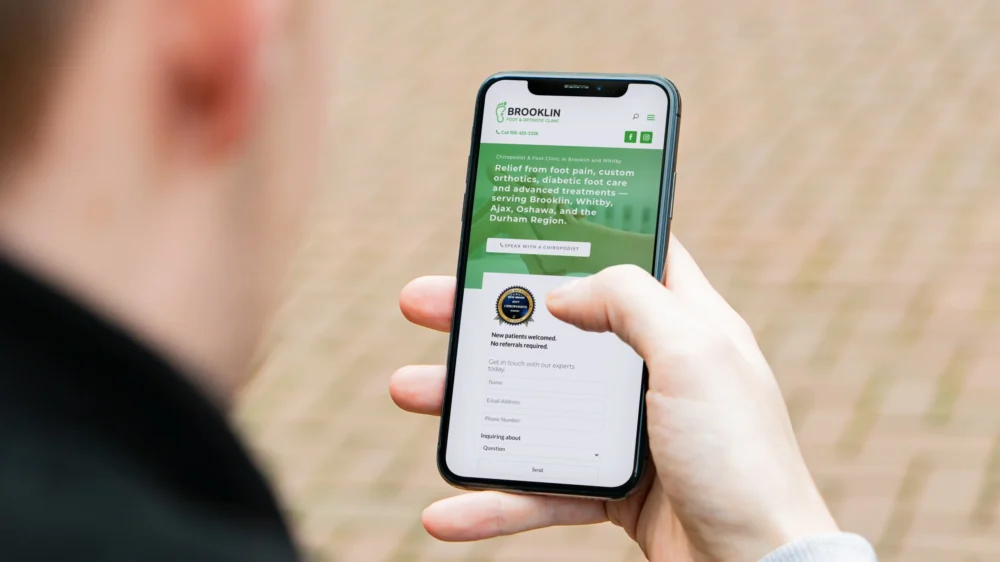
Your Website Needs to Work on Mobile
For many businesses, mobile is where the first impression happens.
A visitor may find you while sitting in a car, walking between meetings, comparing options from home, or searching quickly after a referral.
If your website is difficult to read, slow to load, awkward to navigate, or hard to contact from a phone, you may lose that opportunity.
Mobile-friendly design is not just about shrinking the desktop version of your site. It means thinking about how people actually behave on a smaller screen.
Can they understand your offer quickly?
Can they tap to call?
Can they find your address?
Can they complete a form easily?
Can they move from interest to action without friction?
If not, your website may be creating unnecessary barriers.
Speed Can Affect Trust and Conversion
A slow website can quietly hurt your results.
Visitors may not wait. Search engines may not reward it. And the overall experience can make your business feel less professional than it actually is.
Website speed is especially important when people are comparing multiple options. If your competitor’s site loads faster, explains things more clearly, and makes the next step easier, they may get the inquiry.
Improving website speed can involve compressing images, removing unnecessary code, optimizing hosting, reducing bloated plugins, and building pages properly from the start.
Speed is not just a technical issue.
It is part of the customer experience.
Make the Next Step Obvious
A surprising number of websites do a decent job explaining the business, then fail to clearly guide the visitor.
Your website should make the next step easy.
That does not mean every button has to scream “Buy Now.” The right call to action depends on your business and on how your audience makes decisions.
It could be:
- Book a consultation
- Request a quote
- Call now
- Schedule an appointment
- Ask a question
- Get started
- Visit our showroom
- Download the guide
- Speak with a specialist.
The important thing is that your call to action is clear, visible, and relevant.
People should not have to guess how to move forward.
Build Trust Before You Ask for Action
Most people need some level of confidence before they reach out.
That confidence can come from different places depending on your business.
It may come from testimonials, reviews, case studies, credentials, certifications, before-and-after examples, project photos, media mentions, client logos, FAQs, guarantees, years of experience, community involvement, or helpful educational content.
Trust can also come from the way your website is written.
Do you sound clear?
Do you sound credible?
Do you understand the visitor’s situation?
Do you answer the questions they are already thinking about?
Do you make the process feel easier?
The more confidence your website creates, the easier it is for someone to take the next step.
Local Relevance Can Make Your Website Stronger
If your business serves a specific geographic area, your website should make that clear.
That does not mean stuffing city names awkwardly into every sentence. It means helping both people and search engines understand where you work and who you serve.
For a local business, location can be a major part of trust.
People often want to know whether you serve their area, understand their market, are nearby, or have experience with customers like them.
Strong local website content may include service area pages, location-specific examples, locally relevant FAQs, Google Business Profile alignment, reviews from nearby customers, and clear contact information.
When done properly, local SEO does not make the website worse.
It makes it more useful.
Your Website Should Answer Real Questions
People come to your website with questions.
Some are obvious. Some are unspoken.
How much does this cost?
How does the process work?
How long does it take?
What makes you different?
Do you work with businesses like mine?
Do I need this now?
What happens after I contact you?
Can I trust you?
Answering those questions helps both conversion and search visibility.
It also supports how people now search using AI tools and answer engines. Search is becoming less about matching exact keywords and more about providing clear, useful answers.
The more clearly your website explains your value, services, process, location, and expertise, the easier it is for both people and search engines to understand why you are relevant.
Before You Redesign, Ask Better Questions
If your website is not performing, it is tempting to jump straight to a redesign.
Sometimes that is the right move.
But before you focus only on how the website looks, ask whether it is doing the right job.
- Is your website clear about what you do?
- Can a first-time visitor quickly understand who you help, what problem you solve, and why they should trust you?
- Is your website built around your audience’s needs, or mainly around what you want to say about your business?
- Does each key page have a clear next step?
- Does your website make it easy for someone to call, book, request a quote, ask a question, or take action?
- Does your website support the way people actually make decisions in your industry?
- Are you giving visitors enough information to feel confident, or are you assuming they will contact you before they understand your value?
- Is your website helping your other marketing work harder?
If you are investing in referrals, networking, social media, search visibility, Google Ads, email marketing, or sales outreach, your website should help turn that attention into action.
If these questions are difficult to answer, your website may not need to be prettier.
It may need to be more strategic.
Effective Website FAQs
What makes an effective website?
An effective website helps the right people understand what you do, why it matters, why they should trust you, and what step to take next. It combines clear messaging, strong design, fast performance, mobile usability, helpful content, and a clear conversion path.
Why is my website not generating leads?
Your website may not be generating leads because visitors are not quickly seeing the value, trust, relevance, or next step they need to move forward. The issue may be unclear messaging, weak calls-to-action, slow load times, poor mobile experience, limited proof, or a website structure that does not support how your audience makes decisions.
Does website design affect conversions?
Yes. Website design affects conversions by helping or hindering clarity, trust, navigation, readability, speed, and ease of action. Good design should make your message easier to understand and make the next step easier to take.
How do I know if my website needs a redesign?
Your website may need a redesign if it looks outdated, is hard to use on mobile, loads slowly, does not reflect your current business, fails to clearly explain your value, or does not help generate the right calls, inquiries, bookings, sales, or leads.
What should I fix first on my website?
Start with the areas that most affect understanding and action: your homepage message, key service pages, calls to action, contact path, mobile experience, page speed, trust signals, and answers to common customer questions.
Is SEO enough if my website does not convert?
No. SEO can help bring more people to your website, but if the website does not clearly communicate its value or guide visitors toward action, increased traffic may not translate into more business. Visibility matters, but conversion is what turns attention into opportunity.
Testing and Refining Makes the Website Better
A website should not be treated as a one-time project that gets launched and ignored.
Once people start using it, you can learn from their behaviour.
Which pages are getting traffic?
Which pages are not?
Where are visitors leaving?
Which calls-to-action are working?
Are people calling, booking, buying, or submitting forms?
Are the right search terms bringing people in?
Small changes can make a meaningful difference.
A stronger headline, a clearer service page, a better contact form, a faster load time, an improved CTA, stronger proof points, or better internal links can improve performance.
An effective website is not just designed.
It is refined.
The Real Question: Is Your Website Helping People Choose You?
A good-looking website may help you get noticed.
An effective website helps you get chosen.
The best websites do both.
They look professional, communicate clearly, load quickly, work well on mobile, build trust, answer real questions, support search visibility, and guide visitors toward action.
So before judging your website only by how it looks, ask a better question:
Is your website helping the right people understand, trust, and choose your business?
And just as important, is it helping you get more value from the time, money, and effort you are already putting into marketing, referrals, search visibility, sales, and reputation-building?
If the answer is no, the problem may not be the design alone.
It may be the strategy behind it.
Ready to Take a Closer Look?
If your website looks good but does not seem to be helping enough of the right people take action, it may be time to look beyond the design and review the strategy behind it.
At Mystique, we help businesses clarify their message, strengthen their online presence, and build websites that support real growth.
Ready to see whether your website is helping or holding you back?
Let’s talk.
Brand+Aid
Brand+Aid is your go-to guide for building brands that connect and grow — with practical ideas you can use right away to sharpen your message, stand out locally, and turn attention into action.
Want help applying this to your business? Book a quick call and we’ll map out your next best brand move.
Follow us on social media
Branding FAQs by Business Type
Branding for Trades & Contractors FAQs
Branding for Professional Services FAQs
B2B Branding FAQs