
Contractor Leads
Why Is Your Trade Business Getting Calls for Jobs You Don’t Want?

If your office spends half its time explaining what you don’t do, pulling in more calls could make the week worse. Start by naming a job you’d happily quote again. Then read your website as if you were the person looking to hire you for it. How much work would you have to do to figure out you’d found the right company?
Imagine a GTA plumbing company that wants more planned maintenance for restaurants and commercial properties. Its homepage says “Plumbing for homes and businesses,” the main photo looks residential, and its strongest search page is about emergency drain clearing. A restaurant operator has to infer that the company can work across several locations and schedule work around opening hours. Meanwhile, a homeowner with a blocked drain has been given a perfectly clear reason to call.
Trace a few enquiries back to their starting point
Take ten recent enquiries and mark the ones you’d want again. Add the service requested, location, customer type and what happened next. If your systems show the source or landing page, include it. If you don’t know, leave it unknown. Ask the office which kinds of calls they turn away most and what they typically say when they do.
If poor-fit requests mostly come through ads, look at the search terms and where the ads send people. If they come through Maps, check that the profile describes your current business. If they’re coming from an old page that does well in organic search, decide whether the work is still useful before changing or removing the page. You may have two legitimate audiences that need two clear ways in.
Sometimes the enquiries fit and the problem happens later. If the right people call but rarely reach an estimator, you’re dealing with a handoff problem. If they consistently get as far as a quote and disappear, look at how you explain scope and value, and what happens after you send it.
Give the work you want a proper place
For our hypothetical plumber, a commercial maintenance page would show the kinds of properties served, the geographic coverage and how planned work is arranged. A real example could explain what the team did to limit disruption at an occupied property. The enquiry form might ask about the type of property and the number of locations so the right person can return the call.
Look at how The Goodbrush handles kitchen cabinet refinishing. The page opens with a choice a homeowner is already weighing: update the kitchen without replacing cabinets that are still in good shape. It shows cabinet projects and gives the reader a way to request an estimate. A homeowner can tell within a few seconds whether they’ve found someone for that specific job.
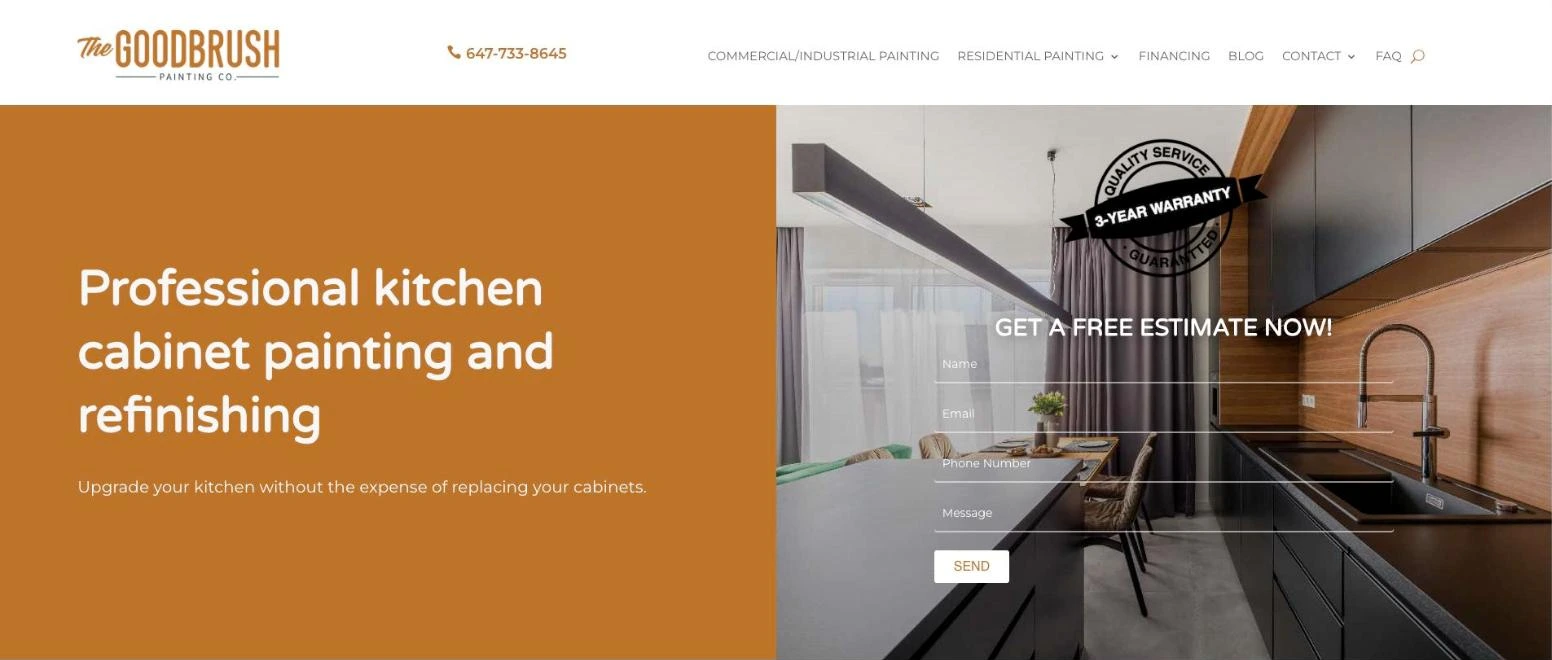
That’s the page test I’d run before buying more traffic: hand the page to someone who hasn’t seen it and ask what job they’d call you for. If their answer bears little resemblance to the work you want, change what the page leads with.
The same idea works for a painting company that wants larger interior projects. If most of its prominent images and offers are for one-room touch-ups, people will assume that’s the work it wants. Lead with the larger projects, say where you work and explain how you scope them. Someone looking for a different job can still find a clearly labelled service page if you offer it. Our guide to marketing a painting company covers other places you can make that same focus clear.
Give the changes a fair comparison. Look at the share of enquiries you’d quote, how many become estimates and how many turn into the work you want. Keep an eye on total qualified opportunities too; a higher share of a much smaller pool can still leave gaps in the schedule.
Common questions
Why am I getting contractor leads outside my service area?
Check the actual search terms, ad location settings, profile coverage and the location wording on your strongest pages. Make your real service area easy to find before customers fill out a form.
How can I get more commercial leads and fewer residential calls?
Give commercial buyers a clear route into the site, with their own services, project examples and contact path. If you still serve homeowners, give them an equally clear route rather than making one page do both jobs.
Should I remove a page that brings the wrong leads?
First check whether the page also brings work you still want or supports other useful content. You may only need to clarify the scope, adjust where ads land or add a better route to the intended service.
Should my quote form ask more qualifying questions?
Ask for information that helps you route or assess a request, such as service type, location and timing. Keep it short enough for the right customer to finish on a phone.
How do I tell whether lead quality has improved?
Define a qualified enquiry before you compare periods. Track how many fit, how many become estimates and what work gets booked. Keep the total number of qualified enquiries in view alongside the percentage.
If you’re sorting through the wrong calls, see how Mystique helps trade businesses attract better-fit work. A few anonymized examples of the enquiries you want and the ones you turn away make the conversation much more useful.
Brand+Aid
Brand+Aid is your go-to guide for building brands that connect and grow — with practical ideas you can use right away to sharpen your message, stand out locally, and turn attention into action.
Want help applying this to your business? Book a quick call and we’ll map out your next best brand move.
Follow us on social media
Turn Every Lead into a Conversation
Automated workflows that nurture, qualify, and convert while you focus on growth.