
Before You Hire a Brand Identity Designer, Make Sure You're Solving the Right Problem
A Brand Identity Is More Than a Logo
The Real Reason Your Brand May Feel Off
Logo Design vs. Brand Identity Design
What Brand Identity Design Looks Like in the Real World
When Should You Hire a Brand Identity Designer?
What a Good Brand Identity Designer Should Ask You
What to Look for When Hiring a Brand Identity Designer
Red Flags to Watch For
The Cheapest Logo Can Become the Most Expensive Choice
Why Strategy Should Come Before Design
Questions to Ask Before You Hire a Brand Identity Designer
Hiring a Brand Identity Designer in Toronto
From Brand Identity to Business Confidence
The Right Brand Identity Helps Your Business Grow With More Confidence
Ready to Strengthen Your Brand Identity?
How to Hire a Brand Identity Designer for Your Small Business
Before You Hire a Brand Identity Designer, Make Sure You’re Solving the Right Problem
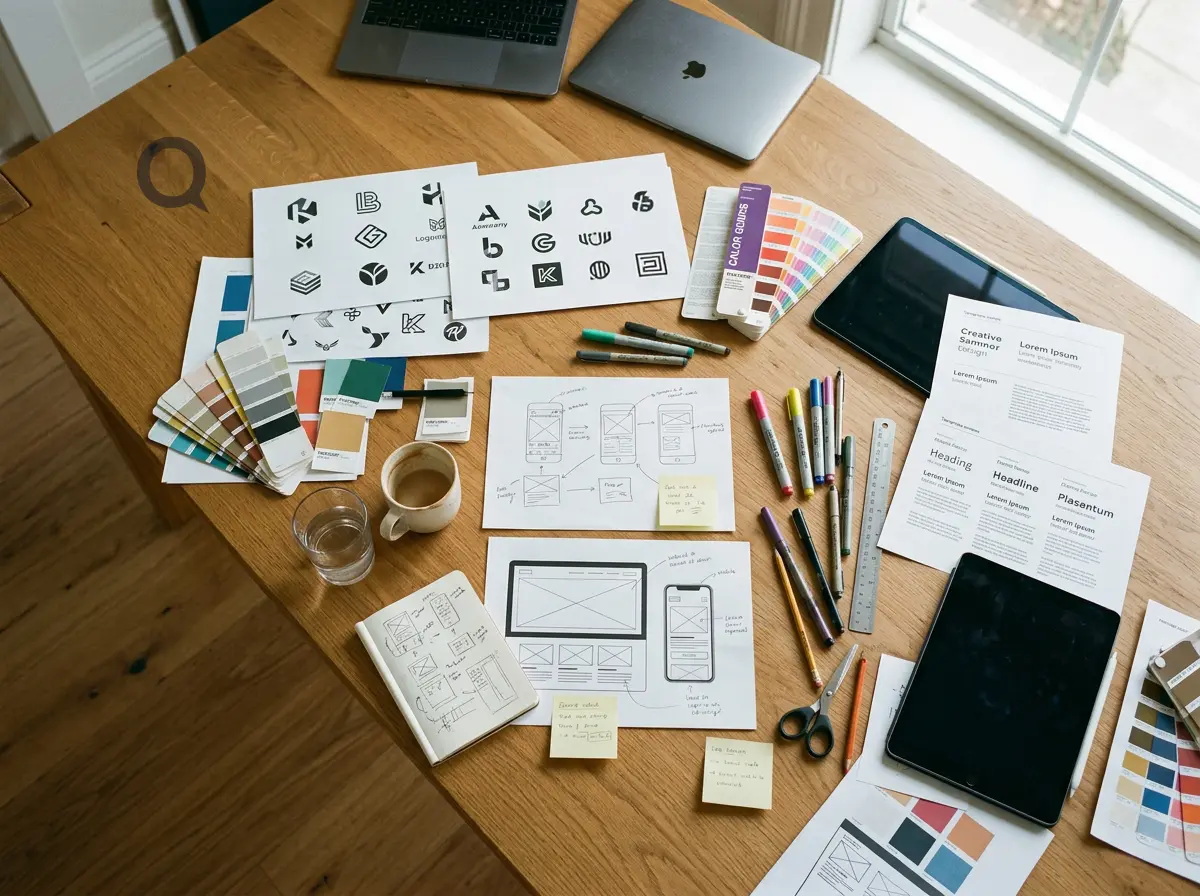
You may start by thinking you need a new logo.
But there’s a good chance the real issue is bigger than that.
Maybe your business has grown, but your brand still feels like it belongs to an earlier version of you. Maybe your website doesn’t reflect the quality of work you do now. Maybe your sales material, social media, signage, proposals, and email templates all look like they came from slightly different companies.
Or maybe you just have that uncomfortable feeling that your business is stronger in person than it appears online.
That’s usually when business owners start searching for a brand identity designer, logo designer, or branding agency.
And that search makes sense.
But before you hire someone to “make things look better,” it’s worth asking a more important question:
What does your brand need to help your business do?
Because the right brand identity designer should not just improve how your business looks. They should help make your business easier to understand, easier to trust, and easier to choose.
A Brand Identity Is More Than a Logo
A logo matters. Of course it does.
It is often the most visible symbol of your business. It appears on your website, invoices, proposals, vehicles, packaging, uniforms, social media, email signatures, business cards, and signage.
But your logo is only one piece of your brand identity.
A complete brand identity design system may include:
Your logo
Your colour palette
Your typography
Your visual style
Your image direction
Your icon style
Your layout rules
Your brand guidelines
Your tone and messaging cues
Your social media and marketing templates
Your signage, print, and digital applications
In other words, your brand identity is the visual and verbal system that helps people recognize you, understand you, and remember you.
A logo gives you a mark.
A brand identity gives your business a consistent presence.
That difference matters, especially when you are trying to grow.
The Real Reason Your Brand May Feel Off
Most business owners know when something is not working long before they can explain exactly what it is.
You may feel it when you send someone to your website and quietly wonder whether it is helping or hurting the conversation.
You may feel it when a competitor looks more polished, even though you know your work is stronger.
You may feel it when your team describes the business in different ways, depending on who is talking.
You may feel it when your marketing attracts inquiries, but not always the right ones.
You may feel it when your brand still looks like a start-up, even though your business has outgrown that stage.
That is usually not just a design problem.
It is a clarity problem.
And that is why hiring the right brand identity designer matters.
The goal is not to decorate the business. The goal is to make the value of the business easier for the right people to see.
Logo Design vs. Brand Identity Design
If you are comparing designers, this is one of the biggest distinctions to understand.
Logo design focuses on creating a recognizable mark for your business.
Brand identity design creates a larger system that supports how your business shows up across every customer touchpoint.
That includes your website, sales presentations, proposals, social media, ads, signage, uniforms, packaging, videos, trade show material, email campaigns, and printed collateral.
A logo may be where the work starts.
But it should never be where the thinking stops.
A well-designed identity should answer practical business questions:
Will people understand what we do?
Will we look credible to the clients we want?
Will our brand still work as we grow?
Will our team have the tools to stay consistent?
Will our website, marketing, and sales material feel connected?
Will this help us compete at the level we want to compete?
That is the difference between a logo that simply looks good and a brand identity that works hard for your business.
What Brand Identity Design Looks Like in the Real World
A strong brand identity is not judged only by how the logo looks on a white background.
It needs to work everywhere your customer experiences your business.
That may include your website, Google Business Profile, social media, proposals, invoices, uniforms, signage, packaging, vehicles, email campaigns, trade show displays, and sales presentations.
This is where many businesses run into trouble.
They may have a logo, but not a system.
So every new piece of marketing becomes a one-off decision. A different font here. A different colour there. A slightly different tone in each sales document. Over time, the business starts to feel less polished than it really is.
A good brand identity designer helps prevent that.
The goal is to create a visual system your business can actually use.
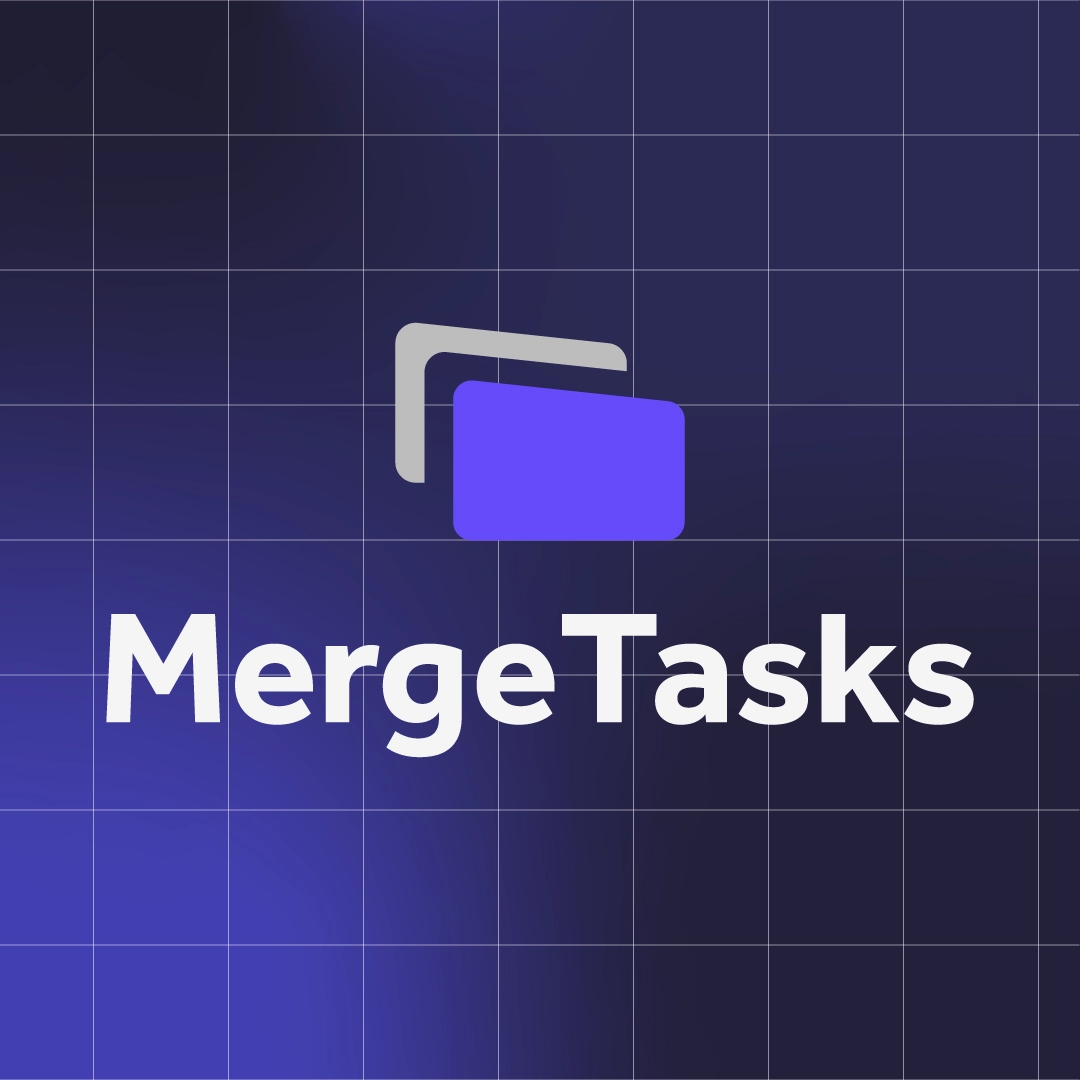
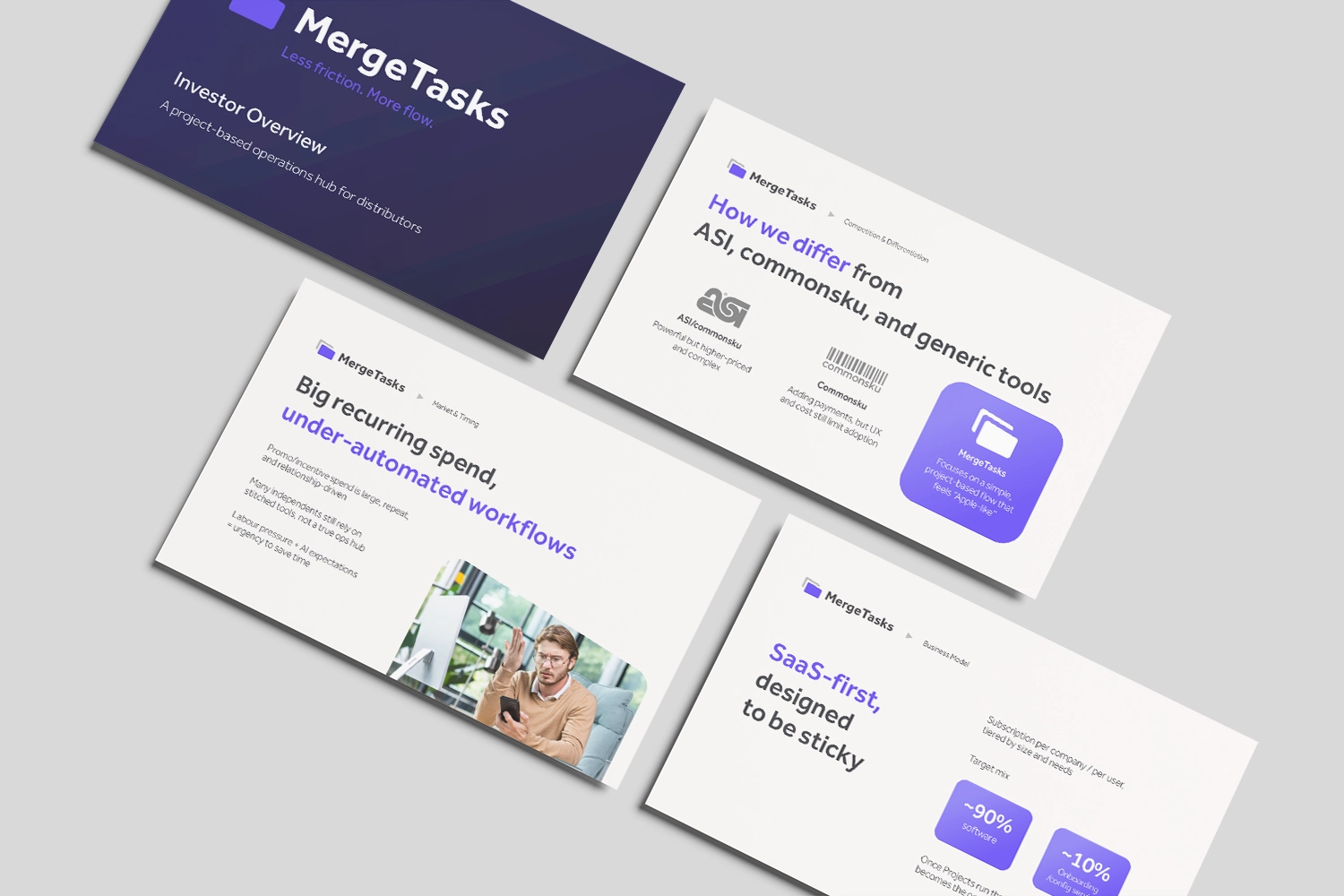
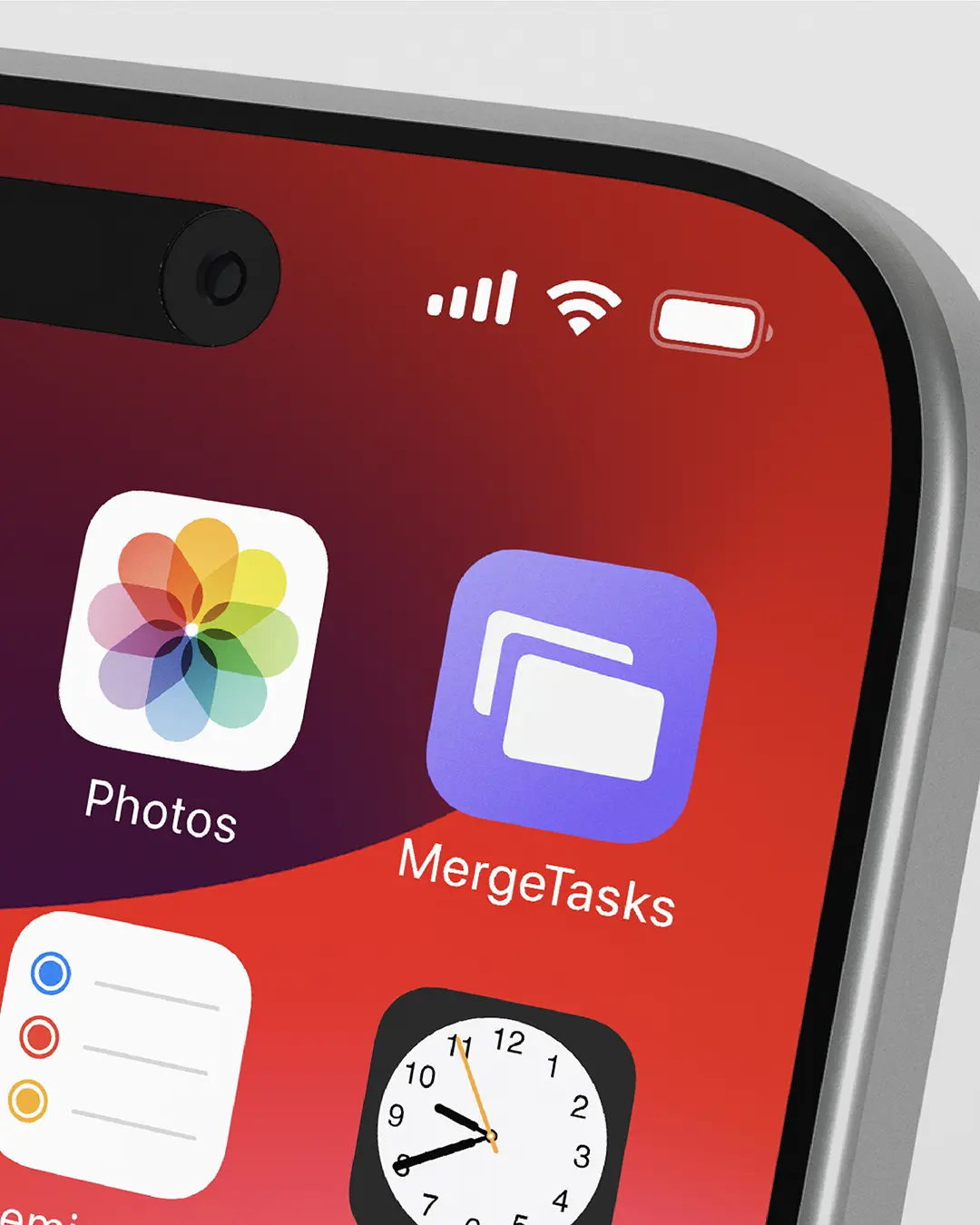
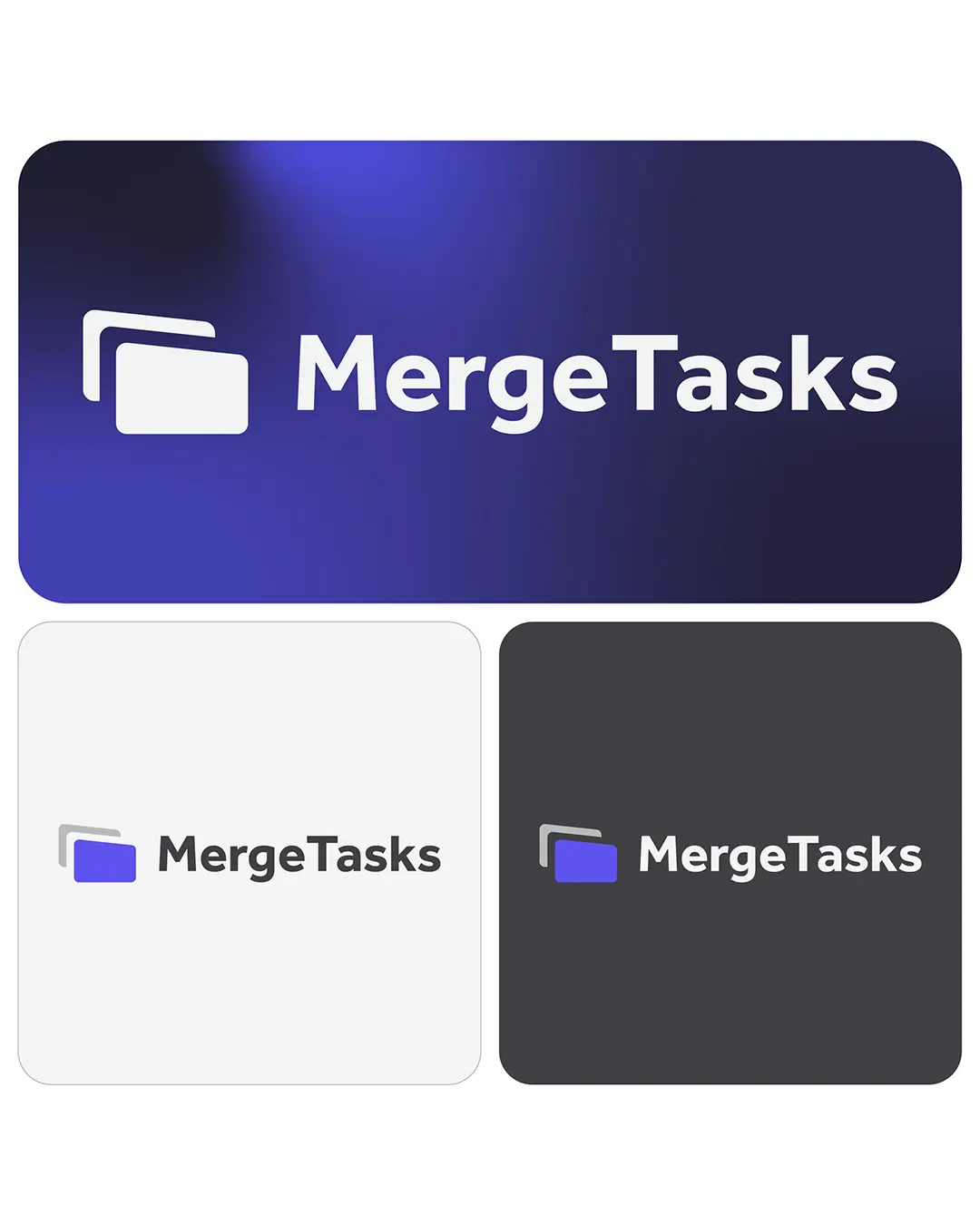
Client example: MergeTasks
For MergeTasks, the opportunity was not simply to create a logo. The brand needed an identity system that could make the business feel organized, useful, and credible from the first impression.
That kind of work requires more than a symbol. It needs structure.
The identity system had to support how the brand would show up across digital touchpoints, sales conversations, product communication, and marketing material. The goal was to make the business easier to understand and easier to trust.
Suggested visual to show:
Logo system, colour palette, typography, icon style, and sample digital applications.
Suggested caption:
For MergeTasks, the identity system was developed to create consistency across digital, sales, and marketing touchpoints, helping the brand feel clear, credible, and easier to understand.
When Should You Hire a Brand Identity Designer?
You may be ready to hire a brand identity designer if your current brand no longer reflects where the business is today.
Common signs include:
Your business looks smaller than it really is.
Your website feels dated or disconnected from your current offer.
Your logo no longer fits the quality of your work.
Your marketing material feels inconsistent.
Your team is not aligned on how to describe the business.
You are attracting too many price-focused inquiries.
You are expanding into a new market.
You are launching a new product, service, or division.
You are preparing for serious growth.
You are tired of apologizing for your website, logo, or presentation material.
That last one is worth paying attention to.
If you hesitate before sending someone to your website, attaching your capabilities deck, or handing over a business card, your brand may be creating friction before the sales conversation even begins.
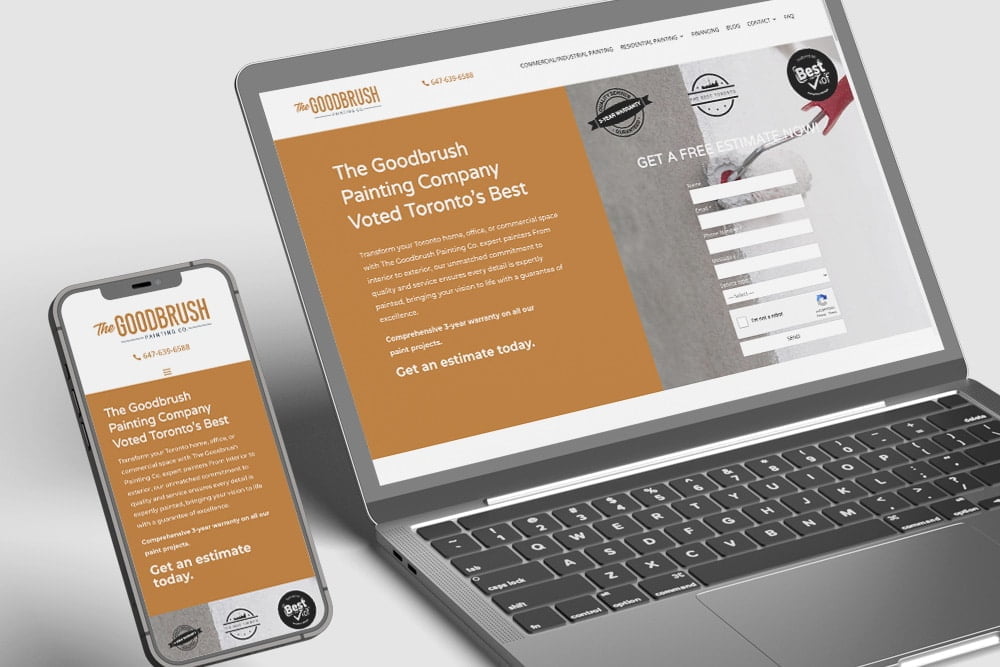


Client example: The Goodbrush Painting Co.
For a service business like The Goodbrush Painting Co., brand identity needs to do more than look attractive.
It has to build confidence quickly.
Homeowners want to know they are dealing with a professional company that communicates clearly, respects the home, manages the project properly, and delivers consistent quality.
That means the brand identity, website, messaging, and marketing all need to work together. The visual system has to support trust before the first call happens.
For Goodbrush, the brand needed to feel polished, local, professional, and approachable, while supporting their visibility in East Toronto and helping potential clients understand the quality of the experience, not just the painting service.
What a Good Brand Identity Designer Should Ask You
The best brand identity designers do not start with colours.
They start with questions.
Before anyone talks about logos, fonts, or visual styles, they should want to understand your business.
They should be asking things like:
Who are you trying to attract?
What do your best customers value most?
Why do people choose you over another option?
What misconceptions do prospects have about your business?
Where is the business trying to grow?
What needs to change in how people see you?
What parts of the current brand are still working?
What parts are holding you back?
How will the identity be used in the real world?
Those questions matter because design without strategy can easily become personal preference.
And personal preference is not enough.
You do not need a brand identity built around someone’s favourite colour, latest trend, or design portfolio style. You need an identity that supports your positioning, your sales process, your customer experience, and your growth.
What to Look for When Hiring a Brand Identity Designer
When choosing a brand identity designer or branding agency, look for more than visual talent.
Strong design matters, but the real value is in the thinking behind the work.
Look for a partner who can help you with:
1. Brand Strategy Before Design
The designer should understand your market, your audience, your competition, and your business goals before developing visual concepts.
If the process starts with “What colours do you like?” before “What are you trying to achieve?” that may be a warning sign.
2. Clear Positioning
Your brand identity should help communicate why someone should choose you.
That means the designer should be able to help clarify what makes your business different, relevant, and valuable.
3. A Complete Visual System
You should not walk away with only a logo file.
You need a practical identity system that can be used consistently across your website, marketing, print material, signage, social media, presentations, and sales tools.
4. Real-World Application
A brand identity has to work outside a presentation deck.
It needs to work on mobile screens, trucks, uniforms, proposals, ads, invoices, storefronts, social posts, email signatures, and trade show displays.
Good brand identity design considers where the brand will actually live.
5. Brand Guidelines
Brand guidelines help your team use the identity properly after the project is complete.
They protect the investment by making sure the logo, colours, fonts, layouts, and visual standards are applied consistently.
6. Website and Marketing Alignment
For most small businesses, the brand identity needs to connect directly to the website and marketing system.
A beautiful identity that does not translate into a stronger website, clearer messaging, or better lead generation is only doing part of the job.


Client example: Simple Plan Skincare
With a consumer brand like Simple Plan Skincare, identity has to work even harder because the customer experience extends across packaging, website content, product education, Amazon storefronts, advertising, refill messaging, and repeat purchase behaviour.
The brand needs to feel clear, trustworthy, and easy to understand in a crowded skincare market.
That means the identity cannot stop at a logo. It has to support how customers compare products, understand ingredients, recognize the brand, and feel confident enough to buy.
For Simple Plan Skincare, brand identity and marketing alignment helped create a more consistent presence across product pages, storefront visuals, educational content, and campaign creative.
Suggested visual to show:
Product packaging, Amazon storefront banner, A+ content, refill messaging, website/product page design, or ad creative.
Suggested caption:
For Simple Plan Skincare, the brand identity needed to support recognition, education, and consistency across packaging, e-commerce, Amazon, and digital marketing.
Red Flags to Watch For
Not every designer is the right fit for every business.
Be cautious if a brand identity designer:
Only talks about style.
Skips strategy.
Offers unlimited logo concepts with no clear process.
Cannot explain the business reason behind a design direction.
Focuses more on trends than your audience.
Does not ask about your customers.
Does not consider how the identity will work across platforms.
Hands over a logo but no usable brand system.
Makes everything look nice, but not necessarily clearer.
That last point is important.
Good design should not make your business harder to understand.
It should remove friction.
The Cheapest Logo Can Become the Most Expensive Choice
It is tempting to look for a low-cost logo designer, especially if you think all you need is a quick visual update.
But a cheap logo can become expensive if it does not solve the right problem.
You may save money upfront, then spend months or years dealing with a brand that still feels unclear, inconsistent, or forgettable.
You may need to redesign the website again.
You may need to redo your marketing materials.
You may confuse customers.
You may weaken your credibility.
You may keep attracting the wrong type of lead.
The real cost is not the logo.
The real cost is the opportunity lost when your brand does not help people understand why you are the better choice.
Why Strategy Should Come Before Design
Before you hire a brand identity designer, get clear on the business problem you are trying to solve.
Do you need to look more established?
Do you need to attract a different level of client?
Do you need to reposition the business?
Do you need to unify several services under one stronger brand?
Do you need to modernize without losing trust?
Do you need your website and marketing to convert better?
Once that clarity is in place, design has a job to do.
The logo, colours, fonts, imagery, layouts, and messaging all work together to support a specific business outcome.
That is when brand identity becomes more than a creative exercise.
It becomes a growth tool.
Questions to Ask Before You Hire a Brand Identity Designer
Before choosing a designer or agency, ask:
What is your process before design begins?
How do you learn about our business and customers?
How do you uncover what makes us different?
Will you help clarify our positioning and message?
How will the identity work across our website, social media, sales material, and signage?
Do you provide brand guidelines?
How many concepts are included, and how are they developed?
What files and formats will we receive?
Can you help with website design and marketing after the identity is complete?
How will you make sure this supports our growth goals?
The answers will tell you a lot.
You are not just hiring someone to create artwork.
You are choosing someone to help shape how your business is seen, understood, and remembered.
Hiring a Brand Identity Designer in Toronto
If you are looking for a brand identity designer in Toronto or a branding agency for small business, it is worth choosing a partner who understands both strategy and execution.
Local businesses often need a brand identity that works across many touchpoints:
website, Google search, social media, signage, sales conversations, referrals, vehicles, proposals, storefronts, and local reputation.
That means your brand identity has to do more than look polished.
It has to help people quickly understand:
Who you are
What you do
Who you help
Why you are different
Why they should trust you
What they should do next
For small businesses, that clarity can make a major difference.
Because when people understand your value faster, they are more likely to take the next step.
From Brand Identity to Business Confidence
When brand identity work is done properly, the biggest change is not always cosmetic.
It changes how the business shows up.
Owners feel more confident sending prospects to the website. Sales conversations become easier because the message is clearer. Marketing starts to feel more consistent. The business looks more aligned with the quality of work it already delivers.
That is the real value of brand identity design.
Not just looking better.
Being understood faster.
Being trusted sooner.
Being easier to choose.
The Right Brand Identity Helps Your Business Grow With More Confidence
Your brand is not just how your business looks.
It is how people make sense of you.
A strong brand identity helps your business show up with more clarity, consistency, and confidence. It helps your website feel more credible. It helps your marketing feel more connected. It helps your team tell the same story. It helps prospects understand why you are worth considering.
And yes, it should look great.
But great design should always serve a bigger purpose.
Before you hire a brand identity designer, make sure you are not just asking for a better logo.
Ask for a stronger foundation.
Because when your strategy is clear, your design has meaning.
And when your brand identity is built properly, your business becomes easier to recognize, easier to trust, and easier to choose.
Ready to Strengthen Your Brand Identity?
If your business has outgrown its logo, website, or marketing presence, the next step is not just to make things look better.
It is to make your business easier to understand, easier to trust, and easier to choose.
Mystique Brand Communications helps small businesses build brand-first identities, websites, and marketing systems designed for clarity, credibility, and growth.
Let’s make sure your brand reflects the business you are building next.
Brand+Aid
Brand+Aid is your go-to guide for building brands that connect and grow — with practical ideas you can use right away to sharpen your message, stand out locally, and turn attention into action.
Want help applying this to your business? Book a quick call and we’ll map out your next best brand move.
Follow us on social media
Q4 Is Coming. Are You Ready?
You Have a Growth Goal. Why Are You Shopping for Marketing Tools?
Does My Small Business Really Need Branding?
How Do I Generate Consistent Leads Without Relying on Referrals?
Can I Start a Business Without Professional Branding?
Lead Follow-Up Systems | Convert More Opportunities
Turn Every Lead into a Conversation
Automated workflows that nurture, qualify, and convert while you focus on growth.